




Inca Trail Fauna
The fauna of the Inca Trail is one of the most fascinating aspects of the journey to Machu Picchu, turning this world-famous trek into a true natural immersion through the Andes.
The Fauna of the Inca Trail to Machu Picchu is not only one of the world’s most iconic trekking experiences, but also a route that crosses an impressive range of ecosystems. From high-altitude mountain passes and rugged Andean slopes to lush cloud forests and humid jungle edges within the Machu Picchu Sanctuary, each section of the trail reveals a different natural environment rich in biodiversity.
This ancient path, part of the vast Inca road network, offers hikers excellent chances to observe wildlife in its natural habitat. The fauna along the Inca Trail includes a wide variety of species such as spectacled bears, vizcachas, Andean foxes, hummingbirds, orchids, and countless insects, while the flora adds even more richness with orchids, bromeliads, mosses, and native mountain plants that thrive in the changing climate zones.
One of the most special aspects of this trek is how closely nature and culture are connected. Along the way to Machu Picchu, the presence of wildlife alongside ancient stone pathways reflects the deep harmony between the Inca civilization and the Andean environment, a relationship that is still visible today.
The most rewarding wildlife sightings usually occur during the second and third days of the classic Inca Trail trek, when hikers enter the cloud forest region. Here, dense vegetation, misty conditions, and warmer temperatures create the perfect habitat for birdlife and elusive mammals, making every step of the journey a potential encounter with nature.
Exploring the Inca Trail is not only about reaching Machu Picchu, but also about experiencing one of the most diverse and beautiful natural corridors in the Andes, where every landscape tells a story of life, adaptation, and ancient heritage.

Fauna of the Inca Trail: Discover Andean Wildlife and Iconic Species While Hiking the Inca Trail to Machu Picchu
Spectacled Bear
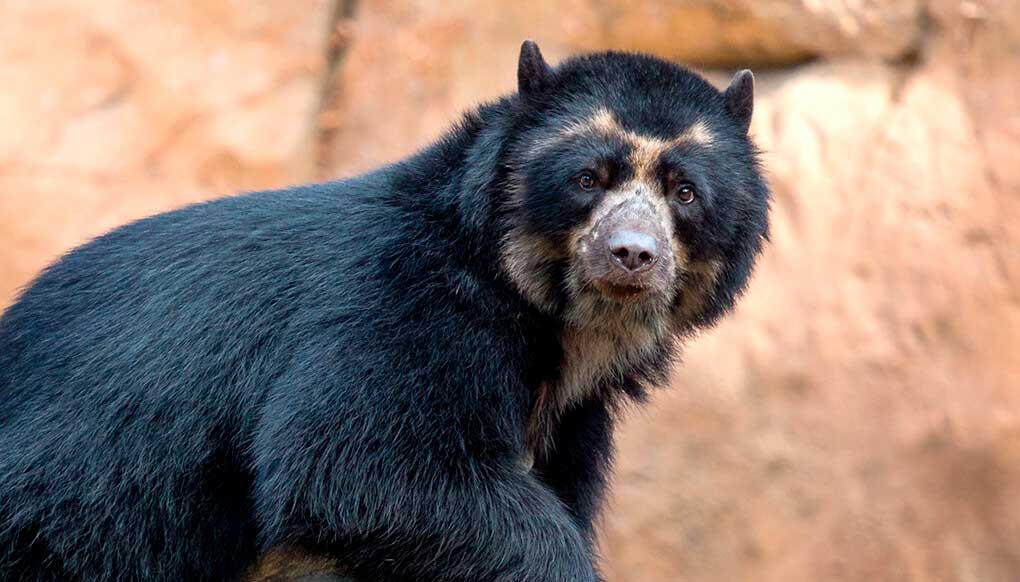
The Spectacled Bear (Tremarctos ornatus), known locally as “Ukumari” in Quechua, is one of the most emblematic and fascinating species inhabiting the Machu Picchu Historical Sanctuary. It is the only bear native to South America, and its presence serves as a key indicator of the health of Andean ecosystems.
1. Distinctive Characteristics
This mammal is easily recognizable by the whitish or yellowish markings around its eyes; however, these markings are not always located there and often extend down to the neck and chest. These patterns are unique to each individual, functioning like a “fingerprint” that allows biologists to identify them. It is a medium-sized bear; males can weigh between 100 and 175 kg, while females are significantly smaller.
2. Habitat and Diet in Machu Picchu
The spectacled bear primarily inhabits cloud forests and puna zones (high-altitude grasslands). Although it belongs to the order of carnivores, its diet is 95% vegetarian.
- Behavior: They are excellent climbers thanks to their powerful claws, and it is common for them to build “platforms” in the treetops to rest or feed safely.
- Diet: It feeds on orchid bulbs, wild fruits, berries, and especially the tender parts of bromeliads (achupallas), which it often climbs to reach.



Andean Puma
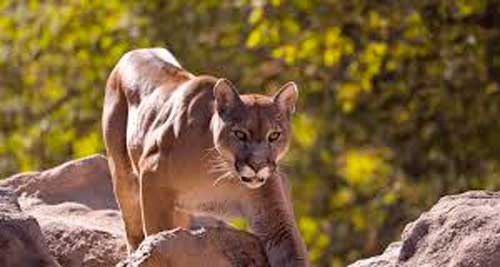
The Andean Puma (Puma concolor), also known as the mountain lion or cougar, is the fiercest feline of the Andes and one of the top apex predators in South America. As a symbol of power and strength, this feline plays a crucial role in maintaining the ecological balance of the high-altitude ecosystems surrounding the Machu Picchu Historical Sanctuary.
1. Physical Adaptations and Characteristics
The Andean puma is a master of camouflage. Its thick coat ranges in color from silvery-grey to tawny gold and deep reddish-brown, allowing it to blend seamlessly into the rocky outcrops and golden grasslands of the Andes.
- Size and Agility: These muscular felines can weigh up to 75 kg and are famous for their jumping ability, capable of leaping up to 5 meters vertically.
- Solitary Nature: They are highly territorial and solitary animals, patrolling vast areas that can span hundreds of kilometers.
2. Habitat and Diet in the Machu Picchu Region
Pumas typically inhabit rocky slopes, high-altitude grasslands (puna), and the dense fringes of the cloud forest. In the remote mountain valleys of the Inca Trail, they find the perfect environment to hunt and rear their young.
- The Hunt: As opportunistic carnivores, they primarily feed on white-tailed deer and camelids (like wild vicuñas or domestic alpacas). In the lower forested regions, they may also hunt smaller mammals such as raccoons, coatis, and various rodents.
- Elusive Behavior: Although they live in the areas surrounding the famous ruins, encounters with humans are extremely rare. Pumas are “ghosts of the forest”; they are mostly nocturnal or crepuscular (active at dawn and dusk) and instinctively avoid human contact.
3. Symbolic Importance: The Trilogy of the Andes
In the Inca Cosmovision, the Puma held a position of immense spiritual importance. It represented the Kay Pacha (the world of the living, the Earth).
Spirit of the Warrior: The Puma symbolized the courage, freedom, and intelligence of the Inca people. Seeing signs of a puma near a sacred site was often interpreted as a powerful omen of protection
The Shape of Cusco: Ancient chronicles and archaeological studies suggest that the city of Cusco was originally designed and built in the shape of a Puma, with the fortress of Sacsayhuaman representing its head.
Andean Condor
The Andean Condor (Vultur gryphus) is one of the largest and most majestic flying birds in the world. As the absolute sovereign of the South American skies, this bird of prey is a national symbol in several countries and a fundamental piece in the ecological balance of the Andes Mountain range.
1. Characteristics and Physiology
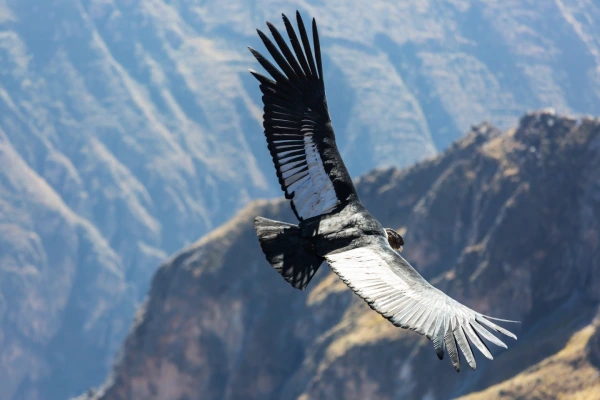
The condor is a marvel of evolution adapted to high altitudes. It is distinguished by its enormous wingspan and predominantly black plumage, with a characteristic “collar” of white feathers at the base of the neck.
- Dimensions: Males are imposing, reaching a wingspan of up to 3 meters and weighing between 11 and 15 kilograms. Females are slightly smaller, an unusual trait among birds of prey.
- Head and Neck: They lack feathers on their head and neck, displaying rough skin that ranges from pink to deep red. Males possess a fleshy crest on their forehead, which allows for easy sex differentiation at a glance.
- Senses: They possess prodigious vision and a highly developed sense of smell, allowing them to locate food from incredible heights while gliding on thermal air currents.
2. Habitat and Diet
Their territory extends along the entire Andes Mountain range, covering from Venezuela and Colombia to the southern tips of Argentina and Chile.
- Scavenging Nature: The condor is a scavenger bird. It fulfills a vital sanitary function by cleaning ecosystems of organic remains, thus preventing the spread of diseases.
- Presence in Machu Picchu: While it is not very common to see them directly over the citadel, it is possible to spot them in the higher zones of the Inca Trail, especially during the first day of the trek or near the highest mountain passes where air currents allow them to soar effortlessly.
3. Symbolism in the Inca Trilogy
In the Inca Cosmovision, the condor represented the Hanan Pacha (the world above, the celestial and spiritual world).
- The Messenger: It was believed that the condor was the only animal capable of communicating with the world of the gods and ancestors. Its extended wings symbolized freedom and immortality.
- Architecture: In Machu Picchu, there is the famous Temple of the Condor, where Inca architects used natural rock formations to sculpt the head and wings of the bird on the floor and walls, demonstrating their deep veneration.
4. Conservation Status and Threats
Unfortunately, this giant of the skies faces an uncertain future. It is currently listed as “Near Threatened” on the IUCN Red List.
- Protection Efforts: Various conservation programs in Peru and other Andean countries are currently working on the reintroduction and protection of nesting sites to ensure that the spirit of the Andes continues to soar through the skies.
- Main Threats: The condor suffers due to habitat loss, poaching based on false beliefs that it attacks live cattle, and accidental poisoning from consuming toxic bait intended for other predators.
The Taruka or Andean Deer
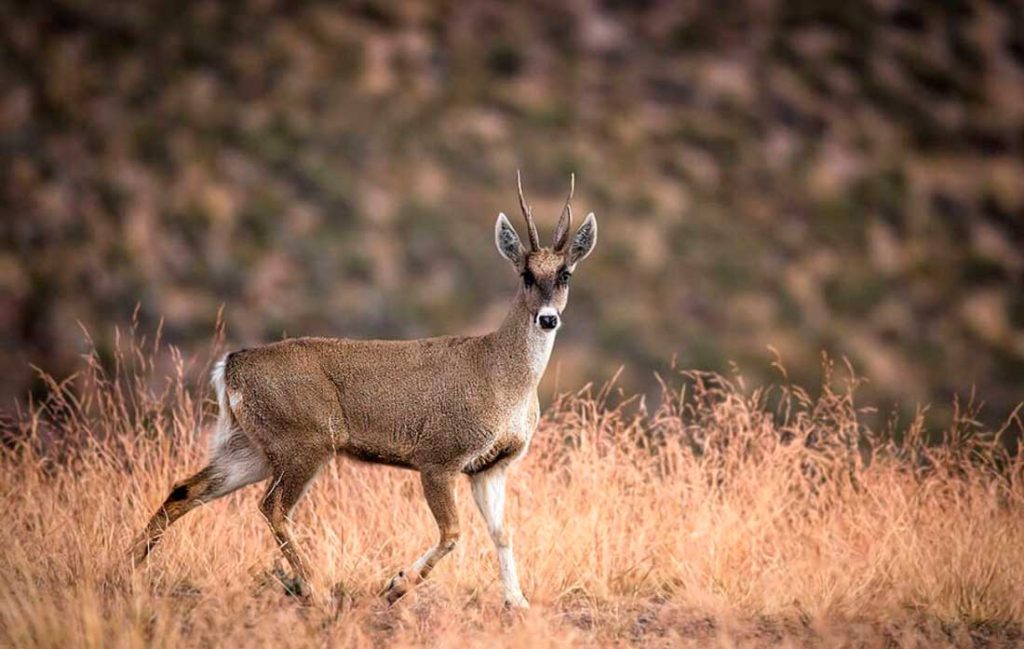
The Taruka (Hippocamelus antisensis), also known as the North Andean deer or “huemul del norte,” is one of the most elegant and, unfortunately, most vulnerable mammals of the Andes Mountains. This deer is a symbol of high-altitude biodiversity and a silent inhabitant of the Machu Picchu Historical Sanctuary.
Characteristics and Adaptations
The Taruka is a slender yet robust animal, perfectly adapted for life on rugged terrain and steep slopes.
- Appearance: It can reach up to 80 centimeters in height at the shoulder. It possesses short, dense greyish-brown fur that serves as excellent camouflage among rocks and dry vegetation.
- Antlers and Hooves: Males feature small, bifurcated antlers that are shed annually. Their hooves are short and strong, specifically designed for climbing rocky walls and moving with agility through the Andean forests.
- Longevity: In their natural state, these deer can live up to 14 years, provided their habitat conditions remain favorable.
Cock-of-the-Rock
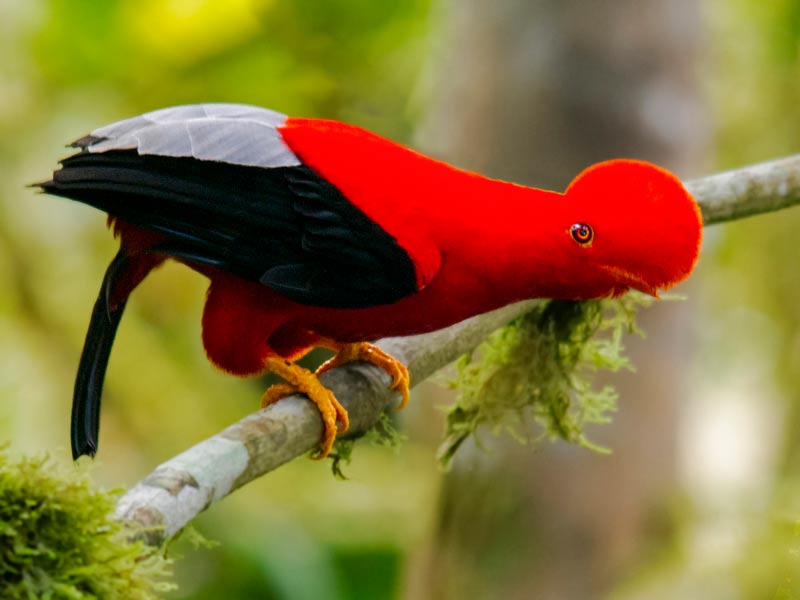
The Cock-of-the-Rock, scientifically known as Rupicola peruviana, also called tunki or tunqui, is one of the most emblematic birds of South America. It inhabits the tropical cloud forests of the Andes Mountains and is considered a symbol of Andean biodiversity. This striking species is a characteristic inhabitant of areas such as the Historic Sanctuary of Machu Picchu and its surroundings.
1. Characteristics and Adaptations
The Cock-of-the-Rock is a medium-sized bird, well adapted to life in humid forests with steep cliffs and dense vegetation.
- Appearance: It measures approximately 30 to 32 centimeters in length. The male is easily recognized by its bright plumage in shades of red, orange, and black, as well as its large fan-shaped crest. The female, in contrast, has a more discreet grayish coloration that helps her blend into the environment.
- Crest and Plumage: The male’s crest is one of its most distinctive features, partially covering its beak and playing an important role during courtship displays. Its vivid colors make it one of the most visually striking birds in the Andes.
- Adaptations: Its strong legs and claws allow it to perch securely on rocky cliffs and branches. Its coloration and behavior are adapted to both attracting mates and avoiding predators in dense forest environments.
- Longevity: Although data in the wild varies, these birds can live several years in stable habitats with low human disturbance.
2. Habitat and Sightings on the Inca Trail
The Cock-of-the-Rock lives mainly in humid cloud forests along the eastern slopes of the Andes, typically between 500 and 2,400 meters above sea level.
- Where to see them: During hikes such as the Inca Trail, it is possible to observe them especially on the last and penultimate days of the route, as the trail descends into the cloud forest. They are often seen perched on cliffs or hidden among dense vegetation. They are also frequently spotted near Aguas Calientes and the Mandor waterfalls.
- Behavior: This bird is generally solitary and quiet. However, during the mating season, it becomes highly active and visible. Males gather in groups—sometimes up to 50 individuals—on rocky display areas to perform courtship rituals, including jumps, wing flapping, and vocalizations to attract females.
Royal Cinclodes
1. Characteristics and Adaptations
The Royal Cinclodes is a medium-sized bird, specially adapted to survive in cold, high-altitude environments.
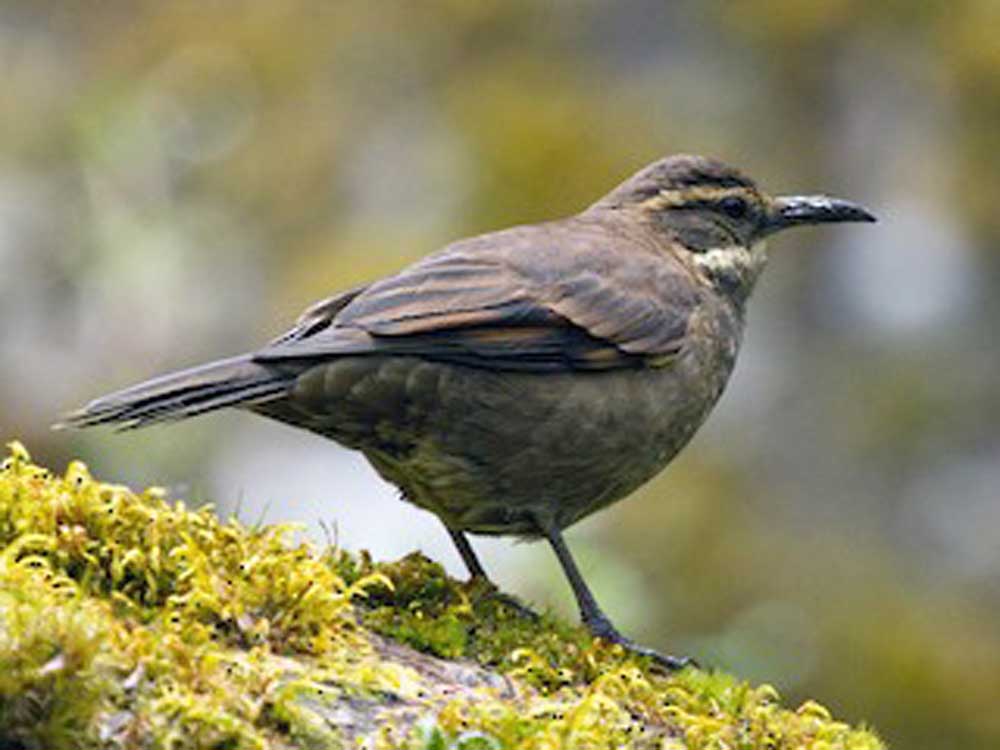
- Appearance: It measures approximately 20 to 22 centimeters in length. Its plumage is mostly brown, with subtle variations in tone that help it blend into its surroundings. A distinctive feature is the presence of pale or whitish markings near the eyes, giving it a unique and recognizable appearance among mountain birds.
- Body and Structure: It has a relatively sturdy body, strong legs, and a slightly curved bill, which it uses to forage for food among bark, moss, and rocky surfaces.
- Adaptations: This species is highly adapted to cold climates and low oxygen levels found at elevations between 3,500 and 4,800 meters above sea level. Its behavior and physiology allow it to survive in harsh Andean conditions where few other bird species can thrive.
- Specialization: The Royal Cinclodes depends heavily on Polylepis forests, one of the highest-altitude forest ecosystems in the world, making it extremely sensitive to environmental changes.
2. Habitat and Sightings on the Inca Trail
The Royal Cinclodes inhabits fragmented Polylepis woodlands located in remote and rugged areas of the Andes.
- Where to see them: Although it is a very difficult species to observe due to its rarity and elusive behavior, it can occasionally be spotted along routes such as the Inca Trail and within the Historic Sanctuary of Machu Picchu, especially in areas where Polylepis trees are still present.
- Behavior: It is generally a quiet and elusive bird, often seen alone or in pairs. It spends much of its time foraging along tree trunks and branches, searching for insects and larvae hidden in bark and moss. Its discreet behavior makes sightings uncommon.
3. Diet and Ecological Importance
This feeding behavior makes it an important part of the ecosystem, as it helps control insect populations. Additionally, it serves as an indicator species: its presence reflects the health and conservation status of Polylepis forests and high-Andean ecosystems.
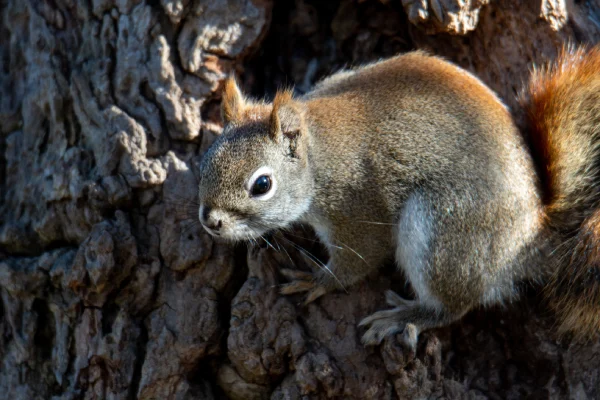
The Andean Squirrel
The Andean lancehead, scientifically known as Bothrops andianus, is a venomous snake native to the Andean regions of Cusco and Puno in Peru. It inhabits tropical mountain forests at elevations between 1,800 and 3,300 meters above sea level.
1. Characteristics and Adaptations
- Appearance: Adults measure around 60 to 70 centimeters in length. Its brown and grayish coloration allows it to blend perfectly with the forest floor and rocks.
- Adaptations: It is an ambush predator, remaining motionless for long periods while waiting for prey. Like other pit vipers, it has a triangular head, venomous fangs, and heat-sensing pits to detect warm-blooded animals.
2. Habitat and Behavior
- Where to see them: It is rare to find this species on the main Inca Trail paths, as it usually stays hidden in dense vegetation and restricted forest areas.
- Behavior: It is shy, nocturnal, and non-aggressive unless disturbed. Encounters are uncommon.
3. Ecological Importance and Safety
This snake plays an important role in controlling small animal populations. Although venomous, it does not pose a threat if left undisturbed. If encountered, it is best to keep a safe distance and continue on your way.
Giant Hummingbird
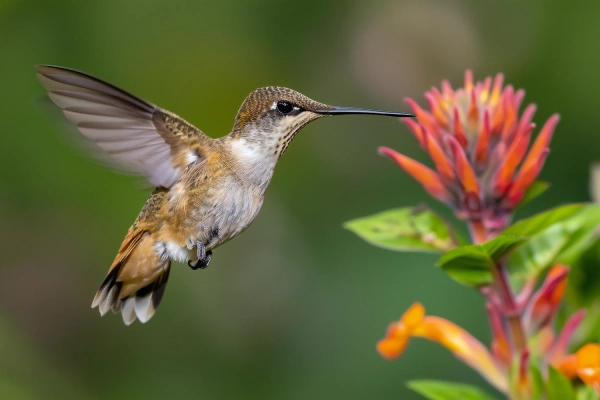
The Giant Hummingbird, scientifically known as Patagona gigas, is the largest hummingbird in the world, reaching over 18 centimeters in length. It inhabits Andean regions of South America, including areas such as the Historic Sanctuary of Machu Picchu, at elevations between 1,500 and 3,500 meters above sea level.
1. Characteristics and Adaptations
- Appearance: It has brown and white plumage, with a more subdued coloration compared to smaller hummingbirds. Its large size makes it easily distinguishable.
- Flight: Although its flight is slower than that of other hummingbirds, it is still agile and efficient, especially when feeding on flower nectar.
2. Habitat and Behavior
- Where to see them: It can be observed along the Inca Trail during the four-day hike, particularly in areas with abundant flowering plants.
- Behavior: It is usually seen alone and feeds mainly on nectar, playing an important role as a pollinator in Andean ecosystems.
3. Importance
Due to its size and unique characteristics, it is one of the most sought-after species by birdwatchers and an important representative of Andean biodiversity.
Butterflies
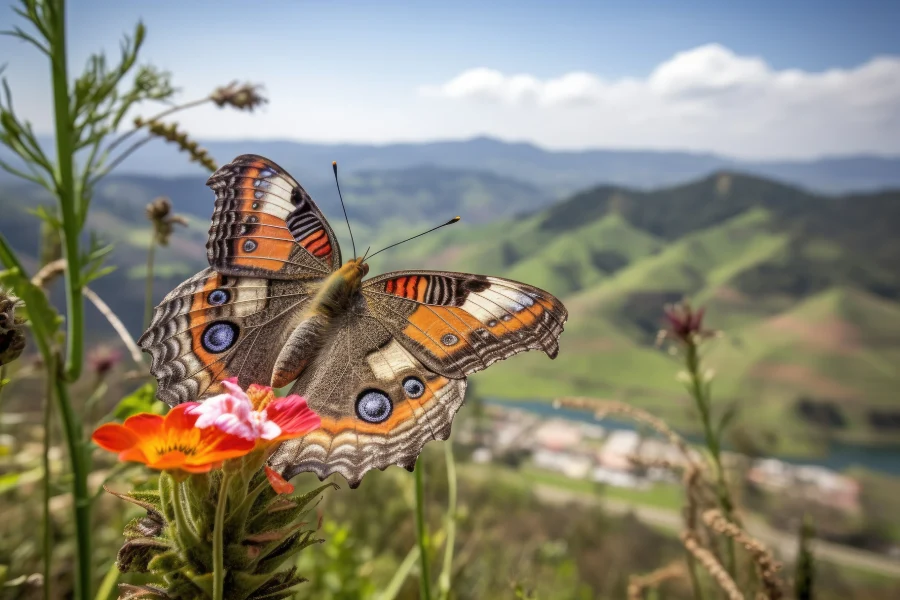
Butterflies are one of the most colorful and emblematic species of the fauna found along the Inca Trail. It is estimated that more than 500 species inhabit the Historic Sanctuary of Machu Picchu, making them an important part of the region’s biodiversity.
1. Characteristics and Habitat
- Diversity: The Andean and tropical geography surrounding the Inca Trail is home to over 700 recorded species of butterflies, reflecting the richness of local fauna.
- Habitat: They are most commonly found at elevations between 1,800 and 2,000 meters above sea level, especially in warm, humid environments with abundant vegetation.
2. Sightings and Importance
- Where to see them: Butterflies are frequently observed during the last days of the Inca Trail, when the route descends into the cloud forest.
- Importance: Beyond their beauty, butterflies play a key role in pollination and are an important indicator of environmental health, highlighting the natural richness and diversity of the area’s fauna..
Llamas
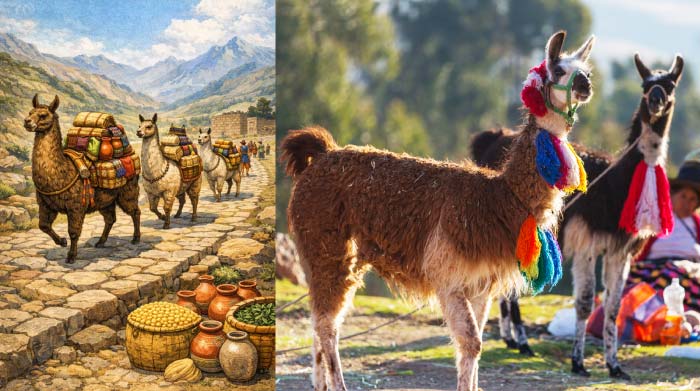
The llama, scientifically known as Lama glama, is one of the most iconic animals of the Andean fauna and a key member of the camelid family. This domestic mammal thrives in the cold, mountainous regions of the Andes and has been essential to Andean culture for centuries. The Incas relied on llamas to transport cargo along mountain roads due to their strength and adaptability. Their wool was used for high-quality textiles, and their meat provided an important food source.
1. Characteristics and Behavior
- Appearance and Temperament: Llamas are docile, curious animals that often approach humans. They can defend themselves by spitting if threatened, but otherwise are gentle and can be photographed or gently petted without causing them stress.
- Adaptations: They are well adapted to the harsh Andean environment, with strong legs for steep terrain and thick wool to endure cold temperatures.
2. Habitat and Sightings on the Inca Trail
- Where to see them: Llamas are commonly seen near Machu Picchu, where about twenty often roam freely around the archaeological site. They also maintain a constant presence along the Inca Trail.
- Importance: Beyond their cultural significance, llamas are an emblematic part of the Andean fauna, symbolizing the connection between people, animals, and the natural environment.