



Inca Trail Fauna Presentation
The wildlife of the Inca Trail to Machu Picchu is not only one of the world’s most iconic treks, but also a journey through a unique ecosystem rich in biodiversity. While hiking the Inca Trail, travelers cross different environments from high altitude mountain slopes and remote mountain valleys to lush cloud forests and humid forests within the Machu Picchu Sanctuary.
This incredible route, part of the ancient Andean road system, offers unforgettable opportunities for wildlife spotting. The fauna along the Inca Trail includes a wide variety of terrestrial animals, birds, reptiles, and insects, while the flora of the Inca Trail features orchids, bromeliads, and diverse bushes and flowers.
Along the way to Machu Picchu, the connection between animals and humans reflects the deep cultural and natural heritage of the Andes. Below, discover the most representative species you may see on the Inca Trail, especially during the second and third days of the classic Inca Trail trek.

Fauna of the Inca Trail: Discover Andean Wildlife and Iconic Species While Hiking the Inca Trail to Machu Picchu
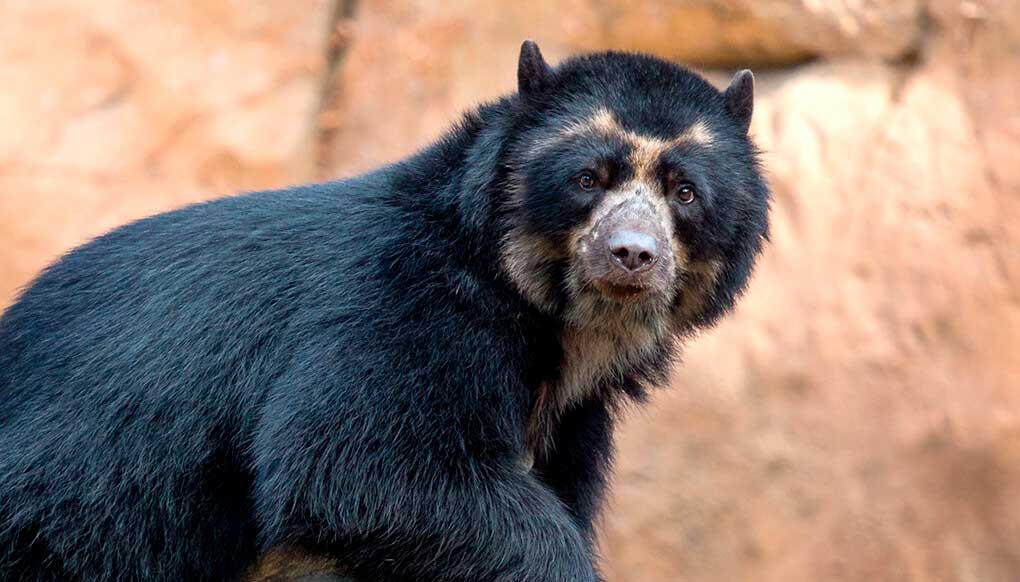
Spectacled Bear
The spectacled bear (Tremarctos ornatus), known locally as el oso de anteojos, is one of the most emblematic species within the Sanctuary of Machu Picchu. This rare Andean mammal is often seen in forested areas where it can forage for fruits, berries, and vegetation.
Recognizable by the white rings around its eyes, this bear is deeply rooted in Andean mythology. Though sightings are rare, experienced guides from a tour operator may increase your chances to hear and see signs of its presence in the humid forests near Machu Picchu.
Andean Puma
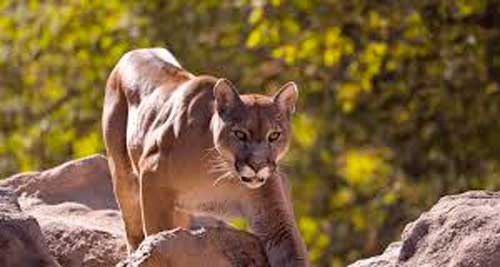
The Andean puma, also known as the mountain lion, is the fiercest feline of the Andes and one of the top predators in South America. This feline in South America has a coat ranging from black to brown, adapted to the changing climates of the Andes.
Pumas typically inhabit rocky and grassy slopes, where they forage and feed on raccoons and deer. Although extremely elusive, they live in the remote mountain valleys of the Machu Picchu Inca Trail area. Encounters are very rare, as they avoid humans.
Andean Condor
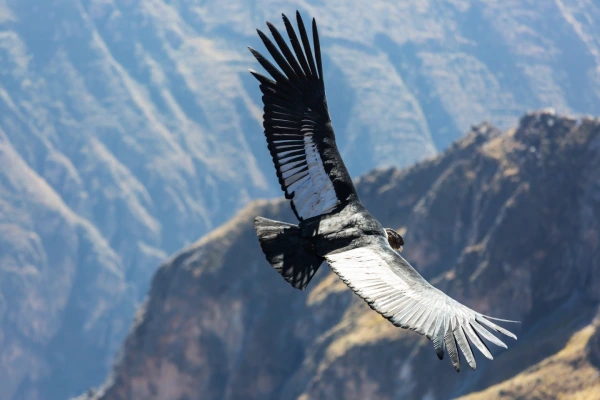
It has the scientific name of Vultur gryphus, it is one of the most impressive and largest birds in all of South America. Males can reach a wingspan of up to 3 meters and weigh between 11 and 15 kilograms, while females are slightly smaller. They are characterized by having a long neck and a bare head with rough, wrinkled skin that is pink to red. Its natural habitat is the Andes Mountain range (mountains of Peru, Ecuador, Bolivia, Colombia, Chile, Venezuela and Argentina), it is a scavenger bird.
It is characterized by its large size, black wings and its great sense of smell and sight. It is not very common to see condors on the Inca Trail, although it is possible, especially on the first day of the trip. Historically revered in many Andean cultures as it is a symbol of power and freedom, the Andean condor unfortunately faces threats due to hunting, habitat loss and accidental poisoning from the consumption of poisoned bait intended for other species and is listed as «near threatened» on the IUCN Red List.
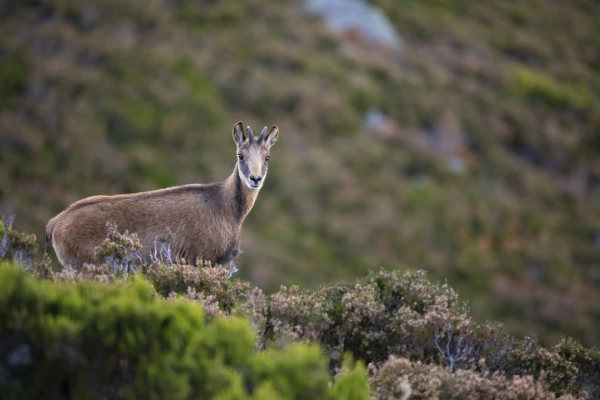
The Taruka or Andean Deer
It has the scientific name of Hippocamelus antisensis, it is a species that is in danger of extinction due to indiscriminate hunting, this animal lives in the Andean forests, it moves from 1,500 meters above sea level to 3,200 meters. It is a slender animal that can reach 80 centimeters in height and has short fur and small horns, known for its agility, it uses its hooves to climb through the Andean forests.
They are animals that are shy around people and very cautious, generally avoiding the proximity of humans and if they feel threatened, they quickly flee. They can live up to 14 years, the human presence and the loss of their natural habitat have endangered this species. During the Inca Trail, especially in the last days of the walk, it is possible to see them hidden in the forests. This animal is the symbol of the fragility of the Andean ecosystem, and its sighting is a reminder of the importance of protecting the species that still inhabit these territories.
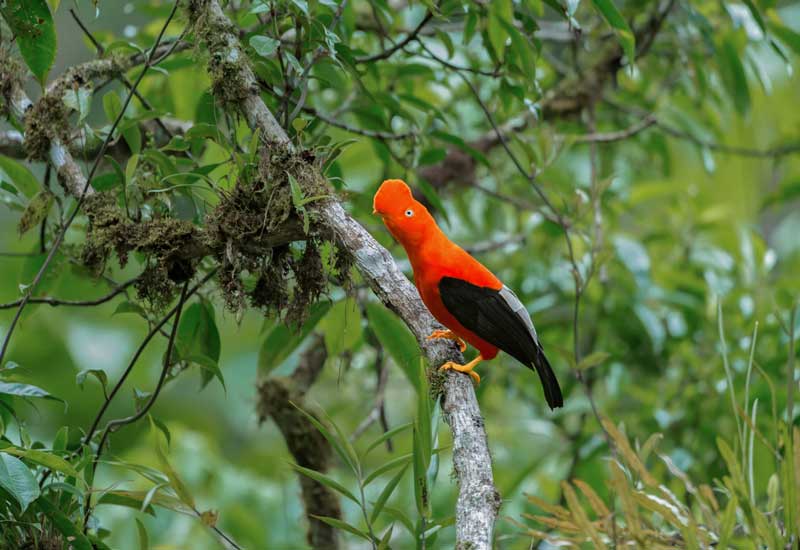
Cock-of-the-Rock
It has the scientific name of Rupicola peruviana, also known as tunki or tunqui, it is one of the most emblematic birds of South America, it lives especially in the tropical forests of the Andes and is a symbol of Andean biodiversity. The cock-of-the-rock is frequently seen on the route of Aguas Calientes and the Mandor waterfalls. It measures approximately 32 centimeters long, the male has very bright colors between red, orange and black, while the female is only gray.
It is a solitary and silent bird, something very curious is that during the mating season around 50 males gather on the rocks to be chosen by the female, these rituals are one of the most impressive sights of the Andean fauna. During the Inca Trail, it is possible to observe them in the last and penultimate days on the cliffs of the mountains hidden among the vegetation. The cock-of-the-rock is one of the most sought-after species by bird watchers and is one of the jewels of biodiversity that lives in the Historic Sanctuary of Machu Picchu and its surroundings, which is why the protection of its habitat is crucial.
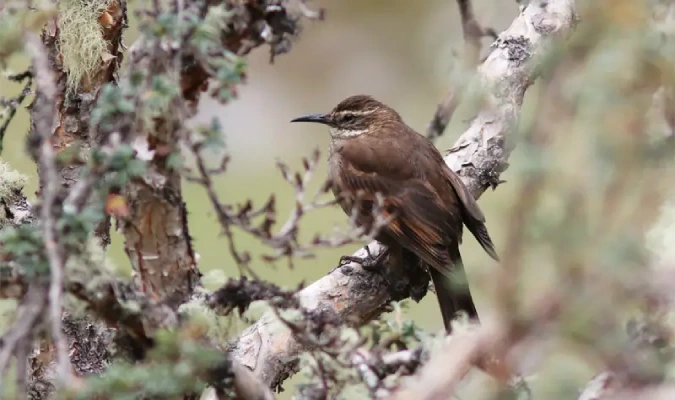
Royal Cinclodes
It has the scientific name of Cinclodes aricomae, it is an endemic bird of Peru which lives in the Polylepis forests on the slopes of tropical forests and mountainous regions of Peru and Bolivia,. This bird prefers mountainous regions of 3,500 to 4,800 meters above sea level which makes it a species that adapts to the cold environments of the Andes. It is brown and has white spots on its eyes. This characteristic distinguishes it from mountain birds, as it gives it a unique appearance.
IIt measures approximately 22 centimeters and is in critical danger of extinction, as its population is small, as well as because its habitat has a limited extension and the extinction of polylepis, which are essential for its survival. Although it is difficult to spot, this bird is frequently seen along the Inca Trail and throughout the Historic Sanctuary of Machu Picchu. The conservation of this bird is important, as it is an indicator of the environmental health of the Andean mountains.
The Torrent Duck
It has the scientific name of Merganetta armata, it is a species of aquatic bird that lives in fast and cold rivers of the Andes. Torrent ducks are medium-sized, with an average length of about 40 to 45 cm. They have distinctive and striking plumage, their head is iridescent green, with a long, pointed crest in males.
The body is mainly reddish brown, with white spots, while females have duller and less bright plumage than males. During the Inca Trail, it is possible to observe them from a distance over the waters of the Vilcanota River, especially in January, February or March, when they can be seen swimming or resting on the banks of the rocks. The conservation of these species is vital to maintain the balance of the ecosystems surrounding the Inca Trail and the historic sanctuary of Machu Picchu.

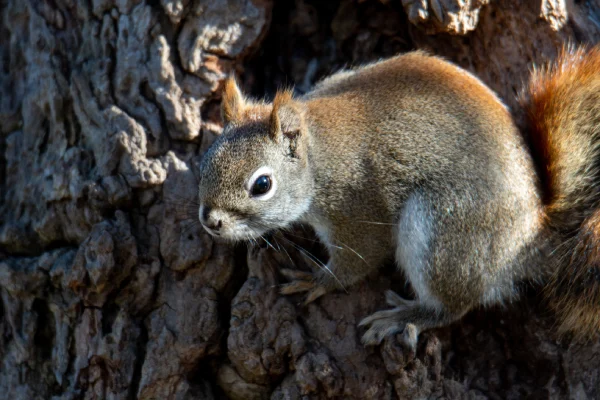
The Andean Squirrel
It has the scientific name of Bothrops andianus. It is an endemic species of poisonous snake. Adults normally measure between 60 and 70 centimeters. It lives in the tropical mountainous regions of Cusco and Puno in Peru. It prefers habitats between 1,800 and 3,300 meters above sea level. They have a brown and leaden color that camouflages them easily. However, they do not usually crawl along the paths of the Inca Trail, but they do crawl in the forests restricted to visitors. If you come across one, it is best not to disturb it and simply follow the path.
Andean Frog
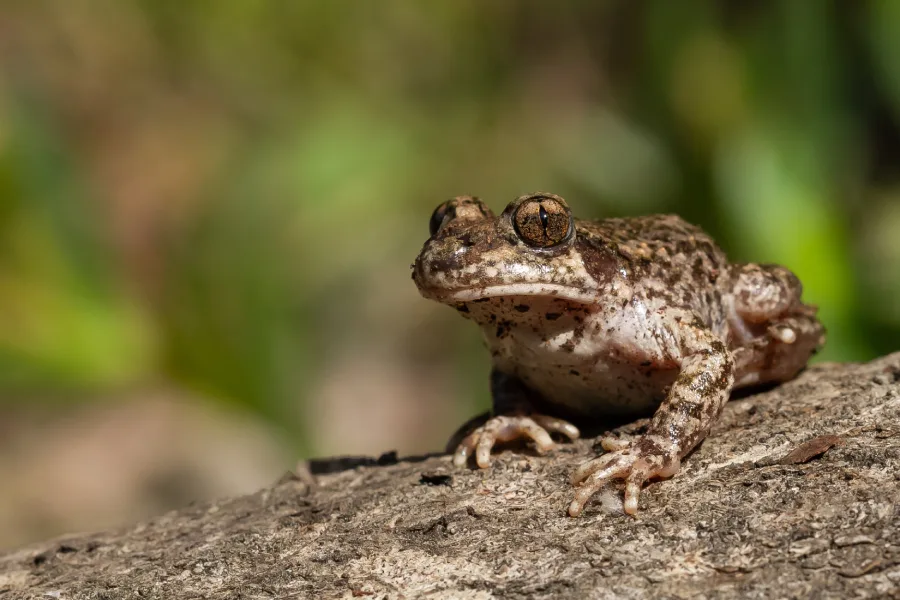
It has the scientific name of Telmatobius, a genus of amphibians that includes more than 64 species, many of which are endemic to the Andes. These aquatic frogs are usually small, measuring 53 to 67 millimeters, and are easily recognized by their orange or brownish coloration, which helps them blend into the mossy streams and wetlands they inhabit. They live in swamps, springs, rivers, and mountain streams, preferring clean, oxygen-rich waters at high altitudes.
In the Sanctuary of Machu Picchu, several species of Andean frogs can be found, many of which are threatened or endangered due to habitat loss, pollution, and climate change. Their presence is a key indicator of ecosystem health, as they are highly sensitive to environmental changes.
Along the Inca Trail, hikers can observe these frogs in their natural habitat, particularly in streams and small ponds during the rainy season, mainly in January, February, and March. They are more active during this time, often seen near moss-covered rocks and flowing water.
These amphibians play a crucial role in the Andean ecosystem. They help control insect populations and serve as a food source for larger animals, including birds, snakes, and small mammals. Conservation efforts focus on protecting their habitats, monitoring populations, and raising awareness about the fragility of high-altitude aquatic ecosystems.
The Andean frog also has cultural significance for local communities, who have long recognized amphibians as part of the natural balance of the Andes. Ecotourism along the Inca Trail provides an opportunity for visitors to learn about these unique creatures while supporting conservation initiatives that help protect both the wildlife of the Inca Trail and the fragile watersheds they depend on.
Giant Hummingbird
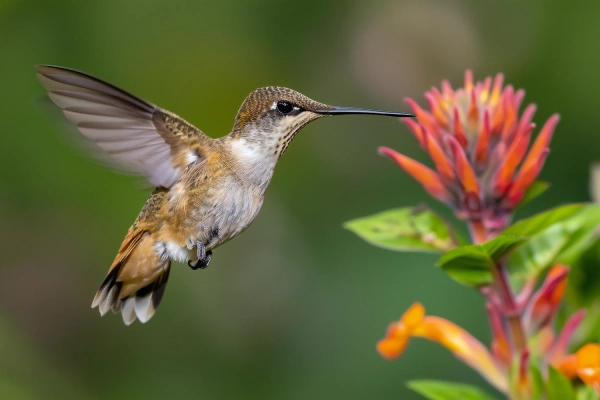
It has the scientific name of Patagona gigas as its name indicates, it is the largest hummingbird on the planet, as it can reach more than 18 centimeters. There are two registered subspecies: the giant hummingbird of Chile and Argentina, as well as the Peruvian giant hummingbird. This last subspecies lives in tropical Andean regions such as the historic sanctuary of Machu Picchu, they can be seen in regions ranging from 1,500 to 3,500 meters above sea level.
They stand out for their brown and white color, although their flight is not as fast as that of common hummingbirds, it is still very agile and efficient at feeding on the nectar of flowers. Its large size and unmistakable colors make it one of the most sought-after birds by bird watchers. Along the Inca Trail it is possible to see the giant hummingbird during the four day hike.
Butterflies
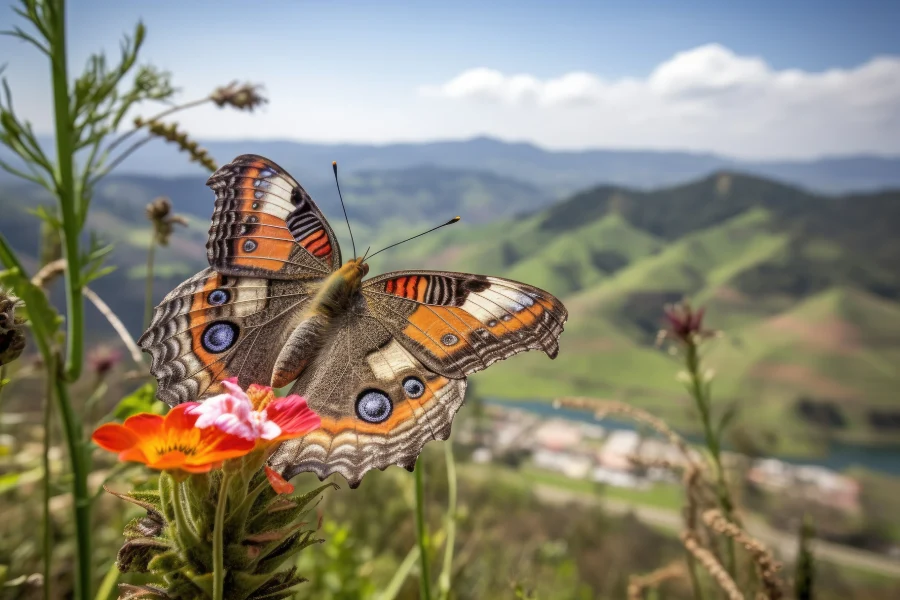
They are one of the most emblematic and colorful species that abound along the Inca Trail. It is estimated that there are more than 500 species of butterflies that live in the historic sanctuary of Machu Picchu and can be observed on the hiking route, they are seen most frequently during the last days of the hike.
They preferably live between 1,800 and 2,000 meters above sea level and it is estimated that there are more than 700 species of butterflies registered in this Andean and tropical geography that surrounds the Inca Trail. In addition to their colorful spectacle, butterflies represent an important part of the biodiversity of the place, showing its natural wealth, their presence is one of the wonders that visitors can enjoy.
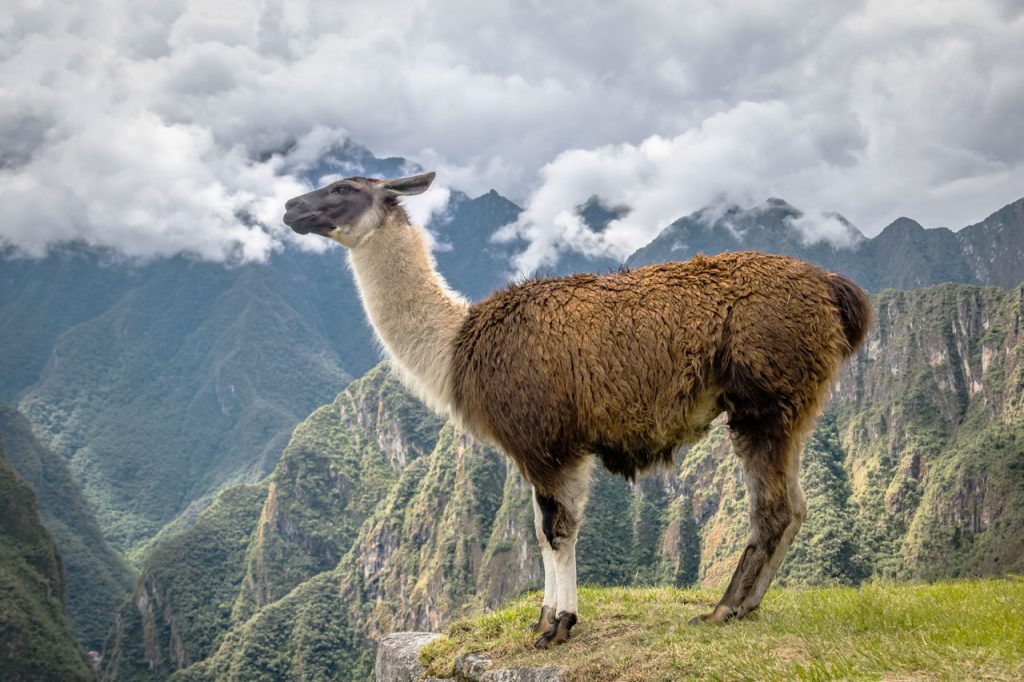
Llamas
It has the scientific name of Lama Glama, this mammal is one of the most iconic animals of the Andean region and an important member of the camelid family. Llamas are a domestic mammal that lives in the cold, mountainous regions of the Andes and were very important in the Andean culture, especially for the Incas, who used them to transport cargo due to their resistance and adaptation to mountain roads. In addition, their high-quality wool was used to make textiles and their meat has also been an important source of food. They are usually seen upon arrival at Machu Picchu, where there are about twenty llamas walking around the archaeological site.
Llamas are docile and curious animals that like to approach humans. However, if they feel threatened, they defend themselves by spitting. You can take photos of them and pet them as long as you do not disturb them. Llamas not only represent a cultural tradition but are also a reminder of the Andean connection and their natural environment. Llamas continue to have a constant and emblematic presence on the Inca Trail.