




Machu Picchu Circuits and Routes: Complete Guide to the 3 Circuits and 10 Routes
Visiting Machu Picchu is a incredible experience, but many travelers don’t realize that understanding the different Machu Picchu circuits and routes can completely transform their visit. Since the implementation of the new visitor system, access to the citadel has been carefully organized not only to preserve this UNESCO World Heritage Site, but also to provide a safer, more structured, and higher-quality experience for visitors.
Today, exploring Machu Picchu is no longer about freely walking through the entire site. Instead, visitors must choose from specific circuits and routes, each designed with a particular focus whether it’s capturing the iconic panoramic views, discovering the most important archaeological sectors, or embarking on adventurous hikes to surrounding mountains.
Understanding the differences between these Machu Picchu circuits and routes is essential, as each one offers a completely unique experience. Some routes are perfect for photography lovers, others are ideal for those interested in history and Inca architecture, while some are designed for travelers seeking physical challenges and unforgettable trekking experiences.
In this complete guide to Machu Picchu circuits and routes, you will discover all 3 circuits and 10 routes available, along with detailed explanations to help you choose the best option according to your interests, time, and physical condition. With the right planning, your visit to Machu Picchu will not just be a tour, but an unforgettable journey into one of the most extraordinary destinations in the world.
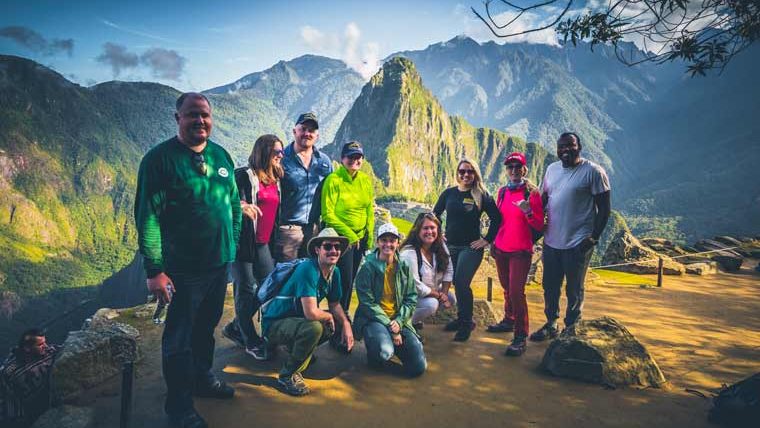
CIRCUIT 01 – PANORAMIC CIRCUIT IN Machu Picchu
Circuit 1 is designed for visitors who are looking for the best panoramic views of Machu Picchu without entering the urban sector of the citadel. All its routes take place in the upper part, allowing access to higher terraces where the most iconic photos of the site can be captured. This circuit includes four different routes, some of which feature additional hikes such as Montaña Machu Picchu, Inti Punku (Sun Gate), or the Puente Inca, making it an excellent option for travelers who prioritize landscapes and trekking.
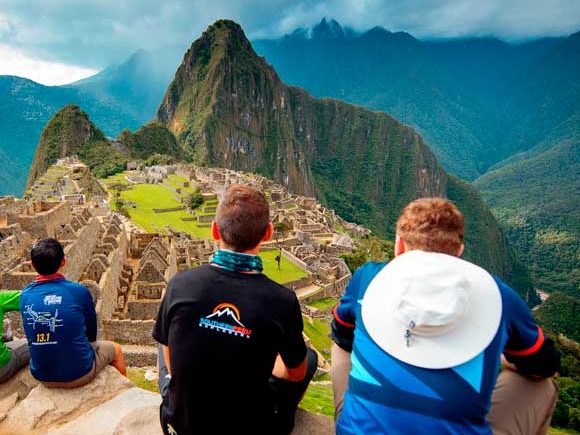
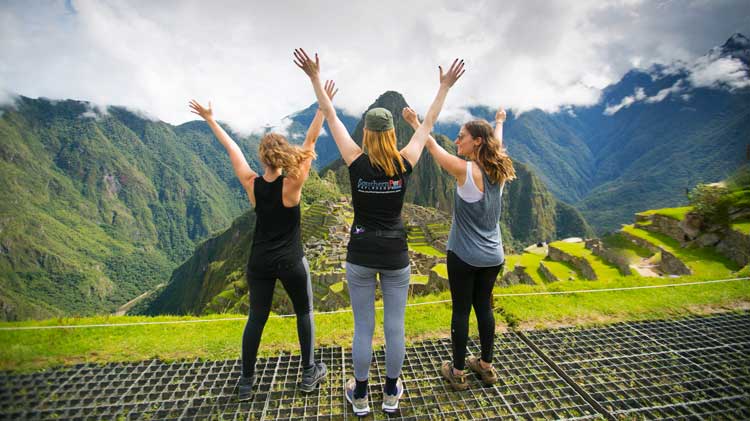
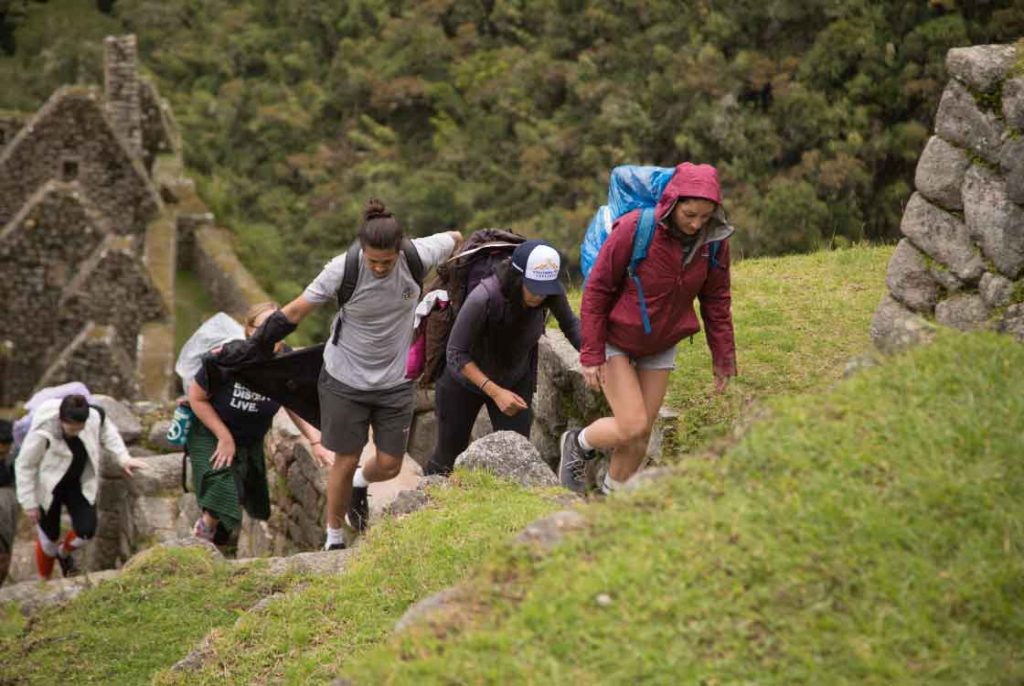
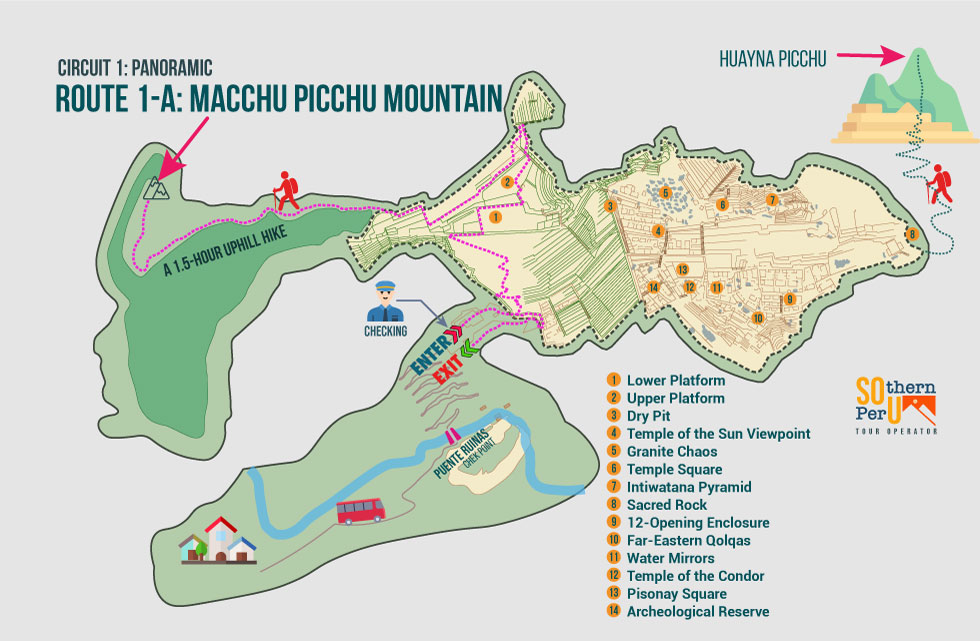
Route 1-A: Machu Picchu + Montaña Machu Picchu
This route is ideal for hiking enthusiasts, as it combines a panoramic visit with the ascent to Machu Picchu Mountain, one of the highest points in the sanctuary. After entering, visitors climb toward the upper sector and continue with a demanding hike of approximately 3 hours round trip. Upon returning, they reach the upper terrace, where two of the best panoramic views of the citadel can be captured, including one very similar to the classic postcard photo.
It is important to note that this route does not allow access to the urban sector or the Guardhouse, and the full experience can take around 4 hours, making it one of the most physically demanding but also the most rewarding options.
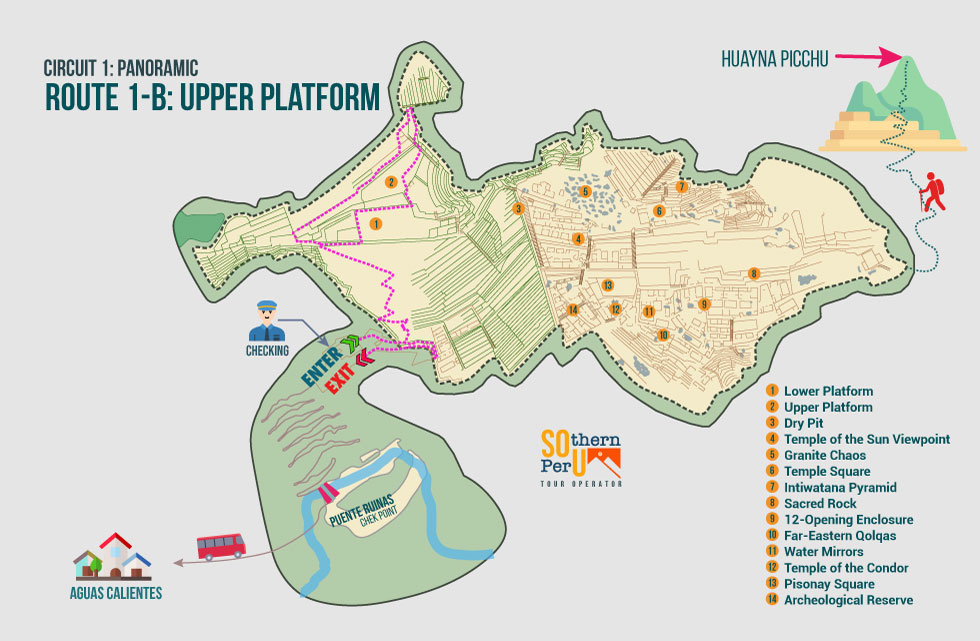
Route 1-B: Upper Terrace Route
This is the shortest and easiest option within Circuit 1, designed mainly for visitors who want to capture the classic panoramic photo of Machu Picchu without long hikes. After entering, visitors ascend directly to the upper terrace, where two strategic viewpoints allow for stunning photos of the citadel. However, this route does not include access to the urban sector or any additional hikes, and the visit lasts approximately one hour. While it is a quick alternative, the experience is quite limited, as it focuses exclusively on panoramic views.
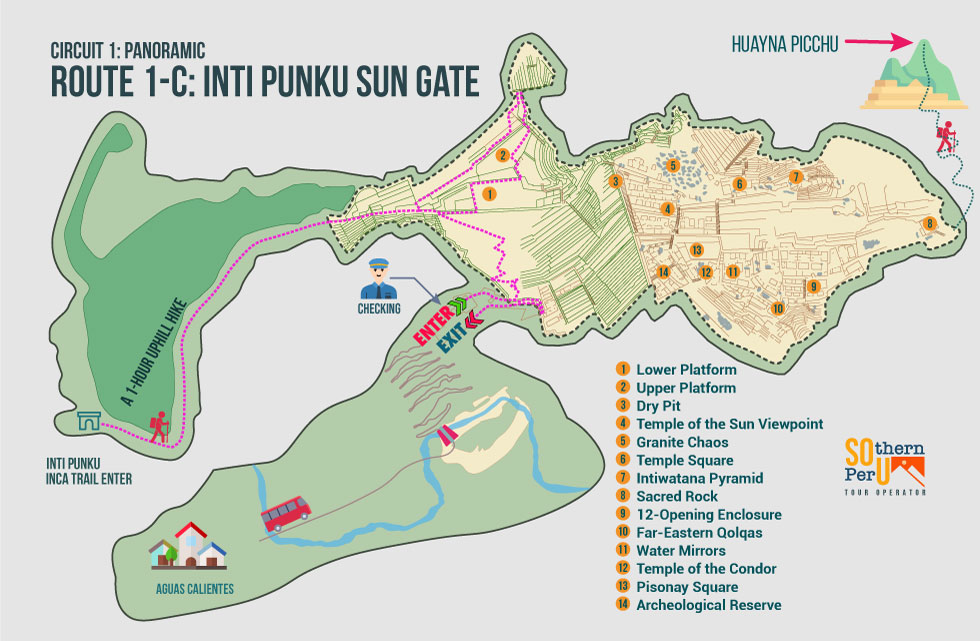
Route 1-C: Machu Picchu + Inti Punku
This route combines scenery, history, and a moderate hike to the Sun Gate, the ancient entrance used by Inca Trail hikers. From the upper sector, visitors take a round-trip walk of approximately 2 hours along a wide path with a gradual incline, making it suitable even for families. Along the way, it is common to encounter travelers arriving from the 4-day Inca Trail, adding cultural value to the experience. After returning, visitors access the upper terrace to take panoramic photos.
This route does not include entry to the urban sector and lasts around 3 hours in total. It is only available during the high season, as it remains closed from October 16 to May 31.
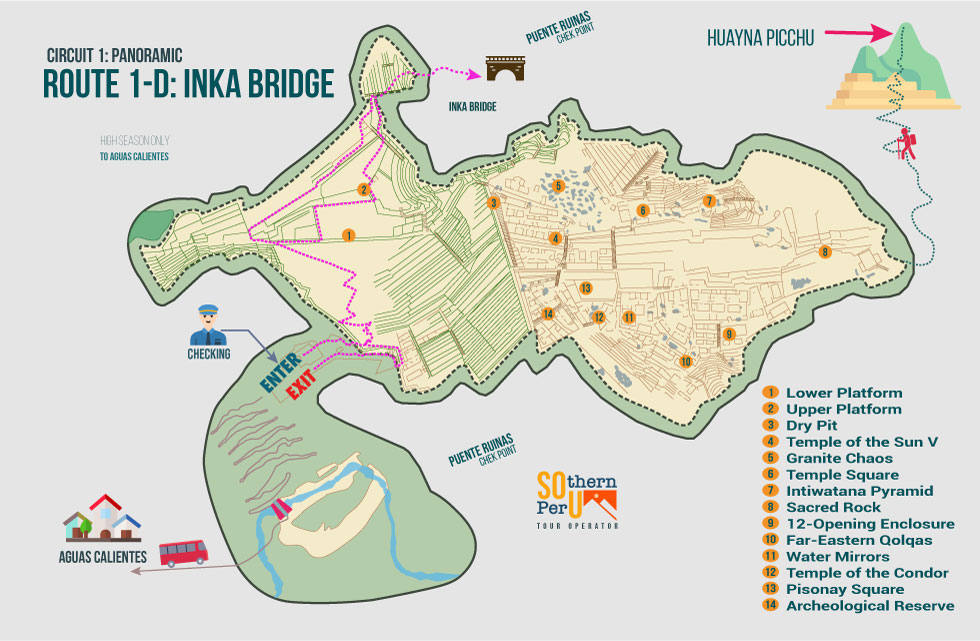
Route 1-D: Machu Picchu + Puente Inca
This route offers a short but fascinating experience to the Inca Bridge, a strategic structure built on a cliff as part of the site’s defense system. After entering, visitors ascend to the upper sector and then take a round-trip walk of approximately 1 hour along a narrow but safe trail with impressive valley views. Upon returning, they reach the upper terrace to capture the classic panoramic photo of the citadel.
As with the other routes in this circuit, access to the urban sector and the Guardhouse is not permitted. The total duration is around 2 hours, and it is only available seasonally, from June 1 to October 15.
CIRCUIT 2 – CLASSIC ROUTES IN Machu Picchu
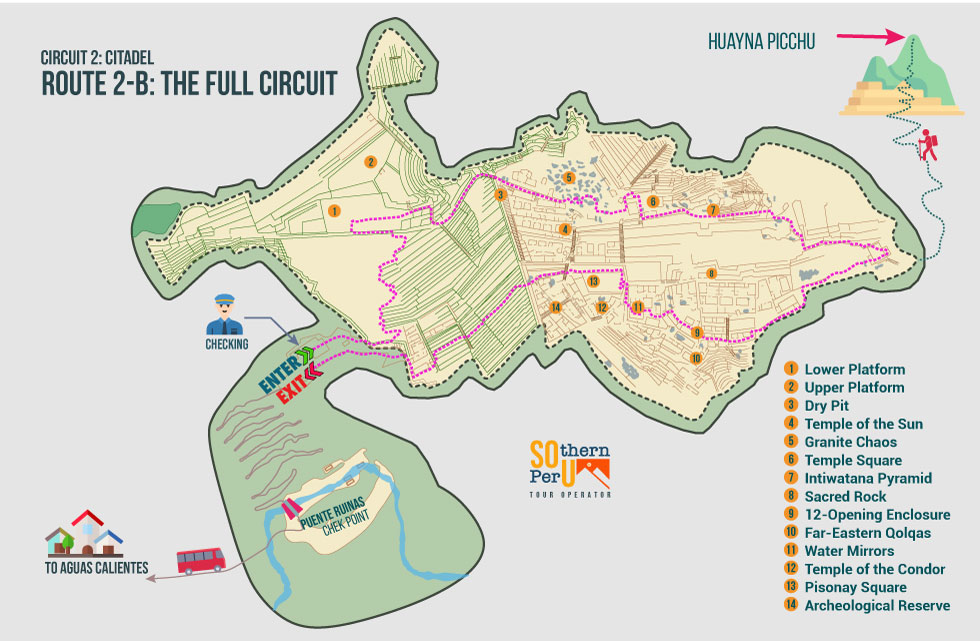
Circuit 2 is widely considered the most complete and rewarding route within Machu Picchu, as it offers an extensive, immersive exploration of the Inca citadel. Designed for visitors who want to understand both the architectural complexity and cultural significance of the site, this circuit is divided into two options: Route 2-A (Classic Route) and Route 2-B (Lower Terrace Route).
Both routes begin with an ascent toward the upper sector of the citadel, where visitors are greeted with one of the most iconic panoramic views in the world—perfect for the classic postcard photo of Machu Picchu. From this vantage point, the layout of the city becomes clear, revealing its harmonious integration with the surrounding Andean landscape.
Unlike shorter or more restricted circuits, Circuit 2 provides access to a large portion of the urban, ceremonial, and agricultural sectors. This allows visitors to experience firsthand the advanced engineering, urban planning, and spiritual worldview of the Inca civilization, making it an ideal choice for a first visit.
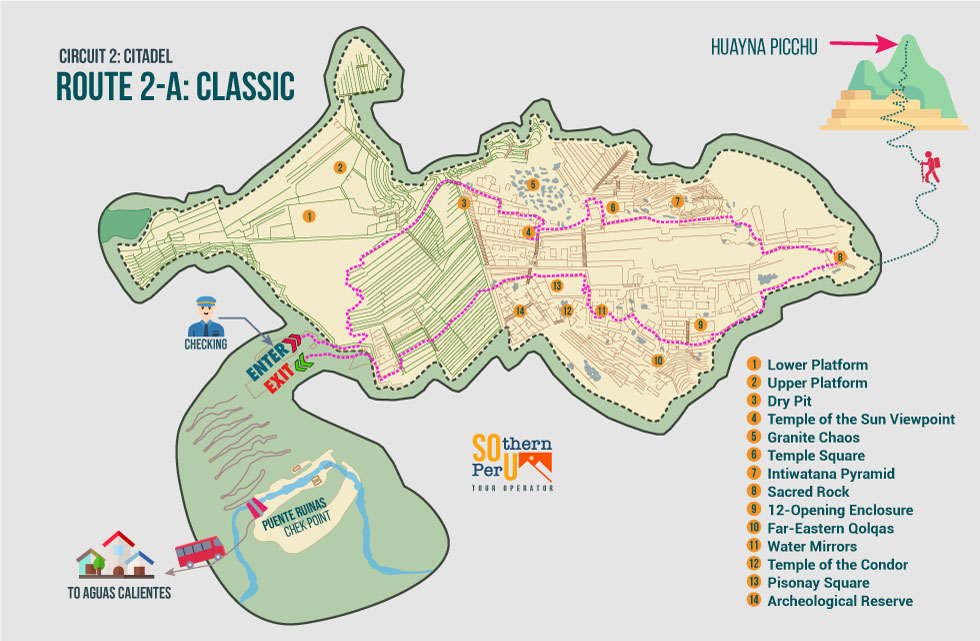
Route 2-A: The Classic Route
Route 2-A is the most recommended option for those who want a comprehensive visit to Machu Picchu, as it covers around 80% of the citadel and is ideal for a first-time experience.
After passing the entrance checkpoint, the route begins with a gradual ascent to the upper sector near the Guardhouse viewpoint, where visitors can take the iconic panoramic photo. The path then descends into the main urban area, connecting key sectors of the site.
Along the way, visitors explore the Inca quarry, the viewpoint of the Temple of the Sun, and the Main Temple, followed by important landmarks such as the Sacred Rock, the Twelve Niches, the eastern storehouses (qolqas), the Water Mirrors, and the Temple of the Condor. The route ends near Pisonay Plaza, associated with social activities.
Although extensive, this route does not include access to restricted areas such as the interior of the Temple of the Sun, the House of the Inca, or the Intihuatana, nor access to the Guardhouse itself or the highest terraces. Even so, it remains the best option for understanding Machu Picchu in a single visit.
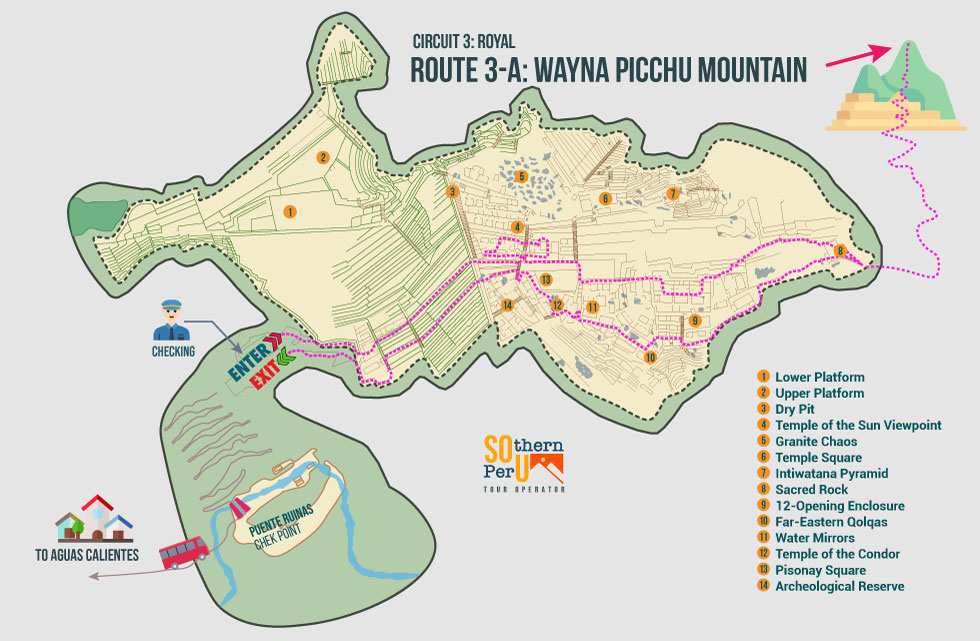
CIRCUIT 3 – ROYALTY (LOWER SECTOR) With Huayna Picchu
This route combines the exploration of the lower sector of the citadel with the challenging ascent to Huayna Picchu, one of the most iconic mountains in the site. The route begins with visits to important structures such as the Temple of the Sun, the House of the Inca, and the Sacred Rock, followed by a steep hike of approximately 2 hours to the summit.
rom the top, visitors can enjoy a breathtaking view of Machu Picchu from a completely different angle. On the way down, the route continues through areas such as the House of the Chosen Women, the Water Mirrors, and the Temple of the Condor. This is an intense and complete experience, lasting around 4 hours, recommended only for visitors over 18 years old and requiring advance booking due to high demand.
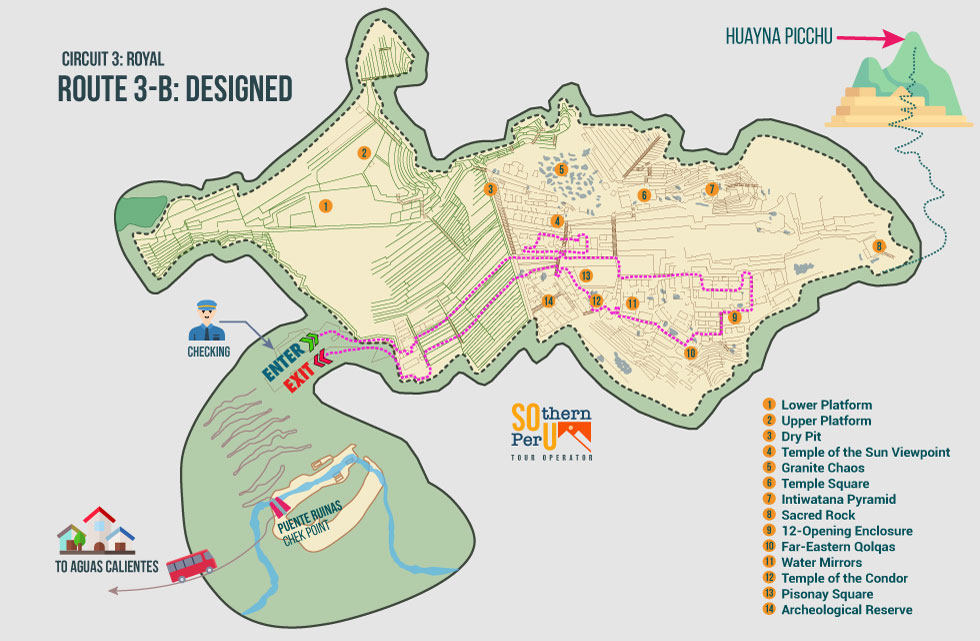
Route 3-B: The Royalty Route
The Royalty Route is the most accessible option within Circuit 3 and is aimed at visitors who want to focus on the historical and cultural value of the urban sector of Machu Picchu. This route includes visits to key sites such as the Temple of the Sun, the House of the Inca, the House of the Chosen Women, the Water Mirrors, and the Temple of the Condor, allowing visitors to understand the organization and lifestyle of the Inca elite.
It is also the route followed by travelers arriving via the Inca Trail, both the 2-day and 4-day versions. The visit lasts approximately 2 hours and, although it does not offer panoramic views, it provides a rich historical and architectural experience.
Route 3-C: Machu Picchu + Great Cavern (Temple of the Moon)
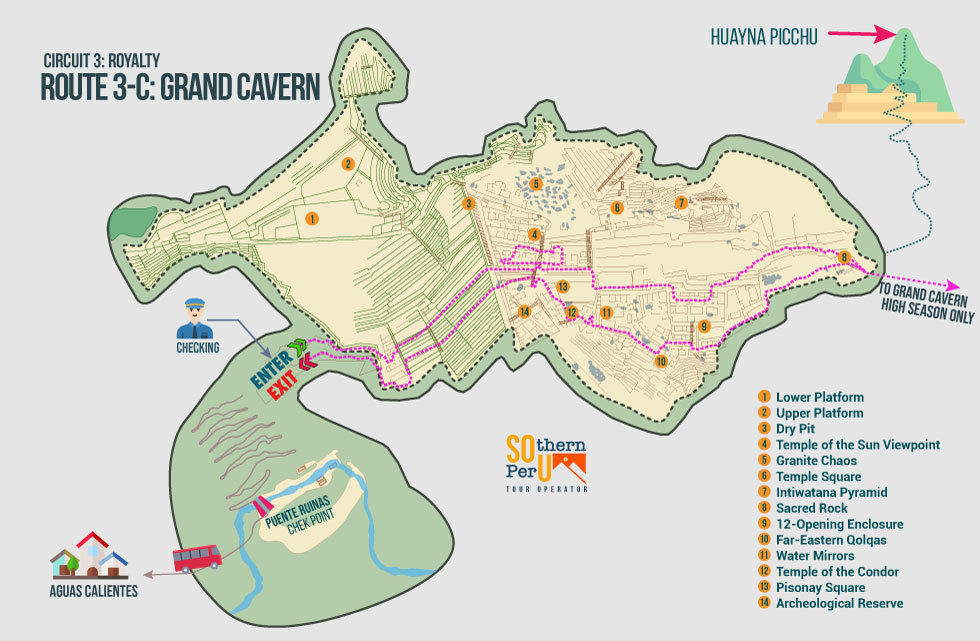
This is one of the longest and least crowded routes in the circuit, ideal for travelers seeking a more exploratory and unique experience within Machu Picchu. The route begins in the lower sector with visits to the Temple of the Sun, the House of the Inca, and the Sacred Rock, before continuing toward the Great Cavern (Temple of the Moon), a hike that takes around 2 hours. This ceremonial site, located in a more isolated area of the mountain, offers a mystical and unique atmosphere.
On the way back, visitors continue exploring important areas such as the Temple of the Condor. The full circuit lasts approximately 4 hours and is only available during the high season, from June 1 to October 15.
Route 3-D: Machu Picchu + Huchuy Picchu
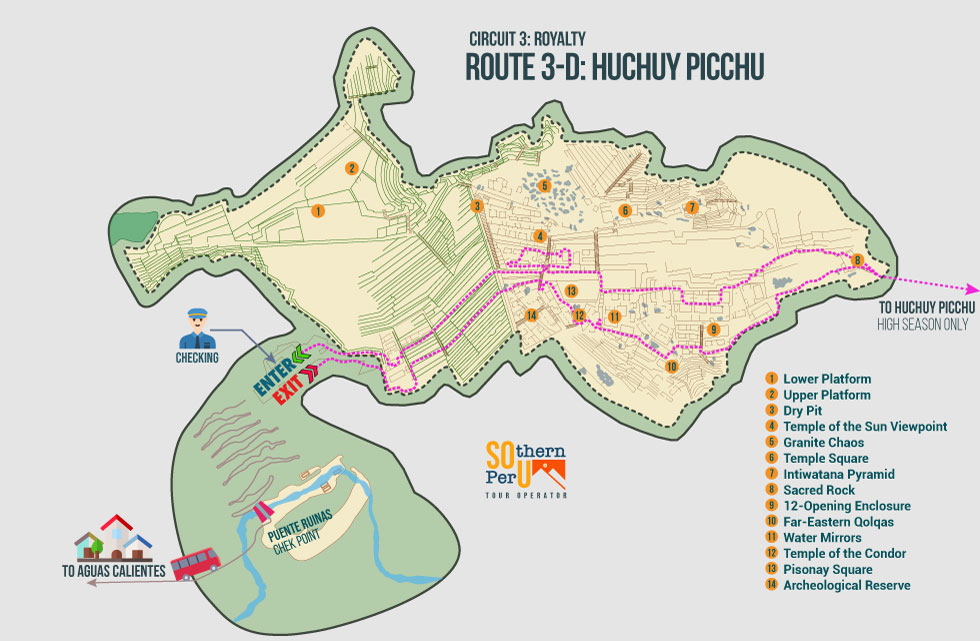
This route is a shorter and more accessible alternative within Circuit 3, ideal for those who want to include a mountain hike without extreme effort. The tour begins in the lower sector of Machu Picchu, visiting sites such as the Temple of the Sun, the House of the Inca, and the Sacred Rock, followed by an ascent to Huchuy Picchu that takes approximately 1 hour. From the top, visitors can enjoy a unique perspective of the citadel, making it an excellent option for photography.
The route then continues through areas such as the House of the Chosen Women and the Temple of the Condor. The full experience lasts about 3 hours and is available during the high season, between June and October.
COMPARATIVE TABLE OF CIRCUITS IN MACHU PICCHU
| Circuit | Main Focus | Access to Classic Photo | Access to Urban Sector | Difficulty | Ideal For |
| Circuit 1: Panoramic | Views & landscapes | Yes | No | Low to High | Photography, short visits, trekking |
| Route 1-A (Mountain) | High-altitude trekking | Yes | No | High | Adventure travelers |
| Route 1-B (Terrace) | Quick panoramic visit | Yes | No | Low | Short stays |
| Route 1-C (Sun Gate) | Scenic + history | Yes | No | Moderate | Balanced experience |
| Route 1-D (Inca Bridge) | Short scenic walk | Yes | No | Low | Easy exploration |
| Circuit 2: Classic | Complete experience | Yes | Yes | Moderate | First-time visitors |
| Route 2-A (Classic) | Full exploration | Yes | Yes | Moderate | Deep cultural visit |
| Route 2-B (Lower Terrace) | Similar but easier | Partial | Yes | Low–Moderate | Balanced travelers |
| Circuit 3: Royalty | Urban & elite sector | No | Yes | Low to High | History-focused visitors |
| Route 3-A (Huayna Picchu) | Adventure + views | No | Yes | High | Thrill seekers |
| Route 3-B (Royalty) | Cultural focus | No | Yes | Low | Cultural tourism |
| Route 3-C (Great Cavern) | Exploration | No | Yes | High | Off-the-beaten-path |
| Route 3-D (Huchuy Picchu) | Light hiking | No | Yes | Moderate | Balanced experience |
FREQUENTLY ASKED QUESTIONS (FAQ)
What are the Machu Picchu circuits and routes?
The Machu Picchu circuits and routes are predefined paths that visitors must follow when exploring Machu Picchu. These routes were created to protect the archaeological site from overcrowding and erosion while ensuring a more organized and enjoyable experience for all visitors.
How many circuits and routes are there in Machu Picchu?
There are 3 main circuits and a total of 10 routes in Machu Picchu. Each circuit offers a different type of experience, from panoramic viewpoints to in-depth exploration of the urban and ceremonial sectors, as well as additional hikes to nearby mountains.
What is the difference between circuits and routes?
Circuits are the main categories that define how you move through Machu Picchu, while routes are specific variations within each circuit. For example, Circuit 1 (Panoramic) includes routes with additional hikes such as Montaña Machu Picchu or Inti Punku.
Which Machu Picchu circuit is the best?
There is no single “best” option among the Machu Picchu circuits and routes. The ideal choice depends on your interests:
- Circuit 1: Best for panoramic views and photography
- Circuit 2: Most complete and recommended for first-time visitors
- Circuit 3: Best for history, architecture, and less crowded areas
Which circuit allows the classic Machu Picchu photo?
The classic panoramic photo of Machu Picchu can only be taken in Circuit 1 and Circuit 2, as they provide access to the upper terraces. Circuit 3 does not include this viewpoint.
Can I visit all circuits in one day?
No, visitors can only access one circuit per ticket when visiting Machu Picchu. If you want to experience more than one circuit, you will need to purchase separate tickets and follow the corresponding schedules.
How long does each circuit take?
The duration varies depending on the selected route:
- Short routes: 1–2 hours
- Standard circuits: 2–3 hours
- Routes with mountains (like Huayna Picchu): up to 4 hours or more
Do I need a guide to visit Machu Picchu?
Hiring a guide is not mandatory, but it is highly recommended. A professional guide can help you understand the history, architecture, and cultural significance of Machu Picchu, making your visit much more meaningful.
When should I book Machu Picchu tickets?
It is recommended to book your tickets at least 1 to 3 months in advance, especially for popular routes like Huayna Picchu, which sell out quickly.
Are all Machu Picchu routes available year-round?
No. Some routes, such as Inti Punku and the Puente Inca, are only available during the high season (typically from June to October), depending on weather and conservation conditions.
What is the most difficult route in Machu Picchu?
Routes that include mountain hikes, such as Huayna Picchu and Montaña Machu Picchu, are considered the most physically demanding due to steep climbs and high altitude.
Is Machu Picchu suitable for older adults or children?
Yes, but choosing the right circuit is essential. Easier routes like Circuit 1-B or Circuit 2-B are more suitable for older adults and families with children, as they involve less physical effort.
What should I bring when visiting Machu Picchu?
It is recommended to bring:
- Comfortable walking shoes
- Water
- Sunscreen and a hat
- A rain jacket (weather can change quickly)
- Your passport (required for entry)
What is the best time of day to visit Machu Picchu?
Early morning is the most popular time to visit Machu Picchu, as it offers cooler temperatures and fewer crowds. However, afternoon visits can also be enjoyable with fewer tourists and unique lighting for photography.
Why are Machu Picchu circuits important?
The Machu Picchu circuits and routes are essential for preserving the site’s cultural and natural heritage. They help control visitor flow, reduce environmental impact, and ensure that future generations can continue to experience this iconic destination.
Conclusion: Choosing the Right Machu Picchu Circuit
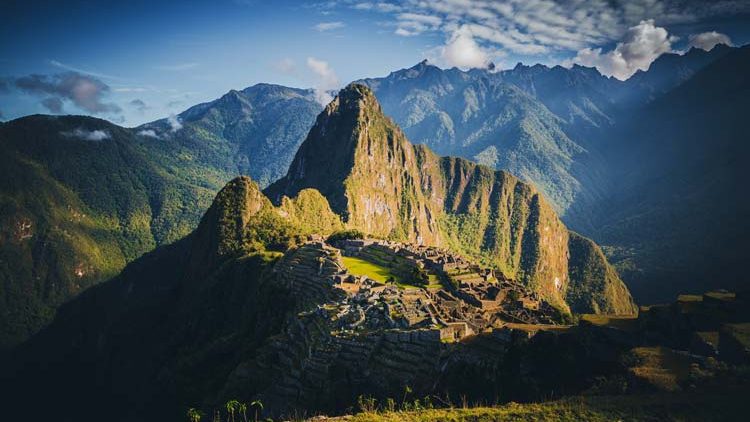
Choosing between the different Machu Picchu circuits and routes is one of the most important decisions when planning your visit. Each circuit offers a completely different experience, from breathtaking panoramic views to in-depth exploration of the Inca urban and ceremonial sectors.
If you are looking for the classic postcard photo, Circuit 1 is the best option. If you want a complete and balanced experience, Circuit 2 is the most recommended. And if you are more interested in history, architecture, and less crowded areas, Circuit 3 will provide a deeper cultural perspective.
Planning ahead and selecting the right route will not only improve your visit, but also allow you to fully appreciate the magic of Machu Picchu in a more meaningful and unforgettable way.