




The 7-Day Salkantay Trek and Inca Trail to Machu Picchu is one of the most complete trekking experiences in the Andes, combining two legendary routes into a single unforgettable journey. Below, we answer the questions travelers ask most often before booking, so you can prepare with confidence for every glacier pass, cloud forest trail, and Inca ruin along the way.
1. What exactly is the Salkantay Trek and Inca Trail combination?
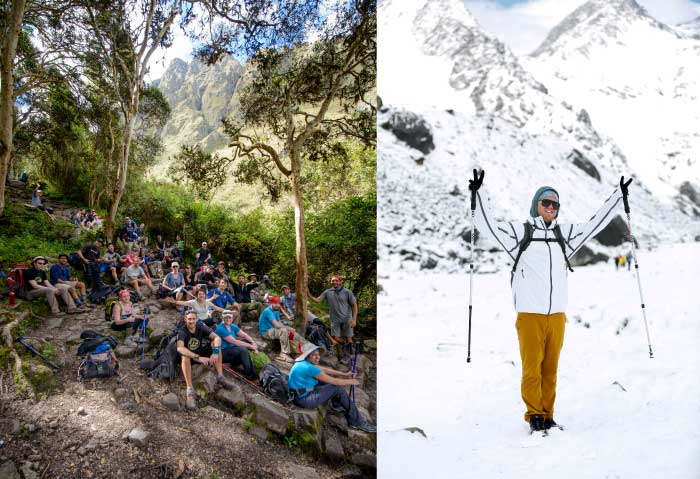
The Salkantay Trek and Inca Trail experience combines two of Peru’s most iconic routes into one continuous 7-day expedition. You begin with the Salkantay Classic, crossing high mountain passes and glacier landscapes, before connecting with the historic Classic Inca Trail for the final stretch into Machu Picchu through the Sun Gate. This combination lets you experience remote archaeological sites like Paucarcancha and Incaracay, which most standard Inca Trail tours never reach.
2. How difficult is the 7-Day Salkantay Trek and Inca Trail?
This trek is rated moderate to challenging, with several demanding days involving long hiking hours and high-altitude passes, including Incachiriasca Pass (4,100 m) and Dead Woman’s Pass (4,215 m). Days 2, 3, and 5 are considered the toughest, each requiring 8 to 10 hours of hiking through steep ascents and descents. While no technical climbing skills are needed, a good level of physical fitness and prior conditioning are strongly recommended before attempting the full Salkantay Trek and Inca Trail route.
3. Do I need a permit for this trek?
Yes. Because the itinerary joins the official Classic Inca Trail network, permits are mandatory and limited in number, with only 500 spots released per day (including staff). These permits sell out months in advance, especially during high season, so your tour operator secures them immediately after booking using your passport details. It’s one of the main reasons early reservation is essential for the Salkantay Trek and Inca Trail to Machu Picchu.
4. What is the best time of year to do this trek?
The dry season, from May to October, is generally considered the best time, offering clearer skies, more stable trail conditions, and better visibility of the Salkantay Glacier and surrounding peaks. The rainy season, from November to April, brings lush, vibrant landscapes but also increased chances of rain and slippery sections on higher passes. Regardless of season, nights at high altitude remain cold throughout the year, so proper gear is essential no matter when you go.
5. How many days and nights does the trek last?
The full itinerary runs 7 days and 6 nights, starting with an early pickup in Cusco and ending with a return by train and private transport after visiting Machu Picchu. This includes five nights camping along the Salkantay and Inca Trail sections, plus a final night in Aguas Calientes or Cusco depending on your itinerary arrangements. It’s a longer and more immersive alternative to the standard 4-day Inca Trail, ideal for travelers wanting a deeper wilderness experience.
6. What is included in the Salkantay Trek and Inca Trail package?
The tour typically includes hotel pick-up in Cusco, professional bilingual guides, a full team of porters and horsemen, camping equipment, a personal duffle bag, all Inca Trail permits, entrance fees, and meals throughout the trek. It also covers the train ticket from Aguas Calientes to Ollantaytambo and private transportation back to Cusco. Because logistics across two combined routes can be complex, having everything pre-arranged lets you focus entirely on the trek itself.
7. What should I pack for the trek?
Pack layered clothing suited for both warm days and freezing nights, since temperatures vary dramatically between the glacier sections and the cloud forest. Essentials include sturdy, broken-in hiking boots, a warm sleeping bag (or rental), trekking poles, sunscreen, sunglasses, a hat, gloves, a headlamp, and a reusable water bottle. Since porters carry your main duffle bag, keep a smaller daypack with water, snacks, rain gear, and personal items you’ll need during the actual hiking hours.
8. How high is the highest point of the trek?
The trek’s highest point is Inca Canal on Day 3, reaching approximately 4,500 meters (14,764 feet), followed closely by Incachiriasca Pass at 4,100 meters and Dead Woman’s Pass at 4,215 meters. These high-altitude sections are physically demanding and require proper acclimatization in Cusco beforehand, ideally two to three days, to reduce the risk of altitude sickness. Guides carry oxygen and first-aid supplies and monitor the group closely throughout these sections.
9. Can beginners do the Salkantay Trek and Inca Trail?
While no technical experience is required, this particular combination is more demanding than the standard 4-day Inca Trail due to its length, altitude, and consecutive challenging days. Beginners in reasonably good physical condition can complete it successfully, especially with proper training beforehand, but it’s not typically recommended as a first-ever trekking experience. If you’re new to multi-day trekking, we recommend building up your cardio fitness in the weeks leading up to the trip.
10. Will I see Machu Picchu the same way as other Inca Trail hikers?
Yes, and arguably in a more rewarding way. On Day 7, you’ll walk through Intipunku, the Sun Gate, at sunrise, just like travelers on the classic 4-day Inca Trail, watching Machu Picchu emerge through the morning mist. The difference is that you’ll arrive after six days of trekking through remote valleys and lesser-visited archaeological sites, making that first view of the citadel feel even more earned.
11. Are meals included during the trek?
Yes, all meals are included from breakfast on Day 1 through lunch on Day 7, prepared fresh by the trekking staff using quality ingredients carried along the route. Meals are generally hearty, energy-dense, and adapted to the physical demands of high-altitude hiking, with hot coca tea served each morning to help with acclimatization. Vegetarian and other dietary restrictions can usually be accommodated with advance notice at booking.
12. Can I hike Huayna Picchu or Machu Picchu Mountain as part of this tour?
Yes, both options are available as add-ons on Day 7 after your guided tour of the Machu Picchu Citadel, though they require a separate permit booked in advance due to limited daily availability. Huayna Picchu offers dramatic views over the citadel but involves steep, narrow sections, while Machu Picchu Mountain is a longer but slightly less exposed climb. Since these permits sell out quickly, it’s best to confirm your interest when booking the main Salkantay Trek and Inca Trail package.
13. How do I get back to Cusco after finishing the trek?
After your visit to Machu Picchu, you’ll descend by bus to Aguas Calientes, where you’ll typically have time for lunch before boarding a train to Ollantaytambo in the Sacred Valley. From there, private transportation completes the journey back to Cusco, usually arriving in the evening. This combination of bus, train, and road transport is standard for all Inca Trail treks and is included in the tour package.
14. What makes this trek different from the standard 4-day Inca Trail?
Unlike the standard 4-day Inca Trail, the Salkantay Trek and Inca Trail combination adds three additional days crossing the Salkantay mountain range, including glacier views, high alpine passes, and remote archaeological sites like Paucarcancha and Incaracay that most Inca Trail groups never see. This extended route offers a genuine sense of expedition and solitude before joining the more heavily trafficked classic trail, making it a top choice for experienced trekkers seeking something beyond the traditional route.
15. Is this trek suitable for photographers and nature lovers?
Absolutely. The route passes through multiple ecosystems in a single week, from the snow-capped Salkantay Glacier to high puna grasslands, dense cloud forest, and finally subtropical vegetation near Machu Picchu. Along the way, you’ll have opportunities to photograph dramatic mountain landscapes, native wildlife, orchids, and hummingbirds, along with remote Inca ruins rarely seen by other travelers, making it an exceptional trip for anyone passionate about landscape and nature photography.
16. How far in advance should I book the Salkantay Trek and Inca Trail?
Because Inca Trail permits are limited to 500 per day and often sell out two to four months in advance during high season (May to September), we strongly recommend booking your Salkantay Trek and Inca Trail at least three to five months ahead of your travel dates. For trips during shoulder or low season, two to three months in advance is usually sufficient, though earlier booking always guarantees better availability and planning flexibility.