




Inca Trail Flora: Exploring the Biodiversity of the Andean Ecosystem Along the Route to Machu Picchu
The Inca Trail is one of the most iconic routes in Peru, attracting travelers from around the world who come to experience a unique trek through the heart of the Andes. Located near Cusco, this ancient path built by the Incas crosses multiple ecological zones within the Historic Sanctuary of Machu Picchu, ranging from lush cloud forests to rugged high Andean landscapes at over 4,000 meters above sea level.
While many visitors focus on the adventure of hiking the Inca Trail, the route is also remarkable for its rich ecological diversity, where plant and animal life coexist in a delicate balance shaped by altitude and climate. The flora of the Inca Trail plays a vital role in this ecosystem, supporting wildlife such as the spectacled bear, a rare mammal, as well as the majestic Andean condor and the vibrant Andean cock-of-the-rock, a truly colorful bird of the region. You may also encounter butterflies and other small species that thrive in this biodiverse corridor.
Along the trail, you will find a fascinating variety of plant species, including delicate fern, thick layers of moss, and unique high-altitude vegetation such as polylepis forests. Bromeliads and other native plants grow abundantly in the cloud forest, while iconic species like Puya raimondii stand out in the more extreme high Andean zones. Many of these plants have medicinal uses and have been traditionally valued by local communities for generations.
This extraordinary combination of biodiversity and history makes the Inca Trail not only an archaeological journey but also an immersive experience into one of the most diverse natural environments in South America.
Orchids on th inca trail
Orchids are one of the most iconic plants along the Inca Trail. The environment provides an ideal habitat for several species of orchids, especially in the more humid and wooded areas. There are two main types of orchids on the Inca Trail: epiphytic and terrestrial. Many of the orchids on the Inca Trail are epiphytes, which means that they grow on other plants, such as trees and rocks, using their aerial roots to absorb nutrients. On the other hand, we have the terrestrial ones. These types of orchids grow directly in the ground. These are less common compared to epiphytes. The best time to observe them is during the rainy season.
Molle trees
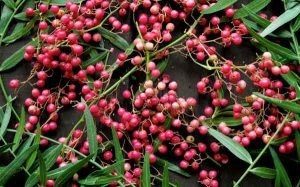
They are native Andean trees, and we find them along the Inca Trail. Molles play a crucial role in the Inca Trail ecosystem, helping to prevent soil erosion with their extensive roots and providing shade for various species of fauna. Its size is medium, its bark ranges from gray to light brown, and its bright green leaves emit a distinctive aroma that intensifies when rubbed. It has flowers, which are small, white, and cream.
They are important for pollination and fruit production. Peruvian cooking uses molle berries as spices. Traditional Andean medicine uses the berries and other parts of the molle to treat various conditions, including digestive and respiratory problems.
Cedars
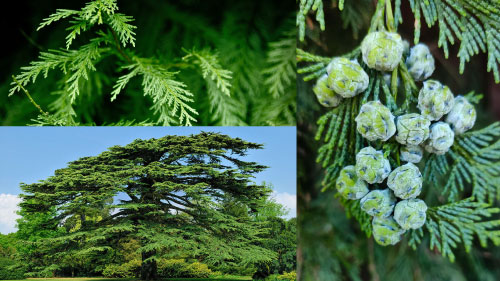
Cedars are important trees within the Andean region’s ecosystem and cultural history. They play a key role in maintaining the biodiversity of Andean forests by providing habitat, shelter, and food for a wide variety of animals, insects, and plant species. Their presence supports the balance of these fragile mountain environments.
Their strong root systems help stabilize the soil, preventing erosion along the steep slopes of the Inca Trail and protecting the integrity of the terrain over time. This ecological function is especially important in high-altitude areas where landslides and soil degradation can occur.
Culturally, cedar wood has long been valued in Andean communities. Its durable and resistant timber has traditionally been used in construction, tools, and everyday structures, making it an important resource that supports local livelihoods and reflects a deep connection between people and nature.
Queuña
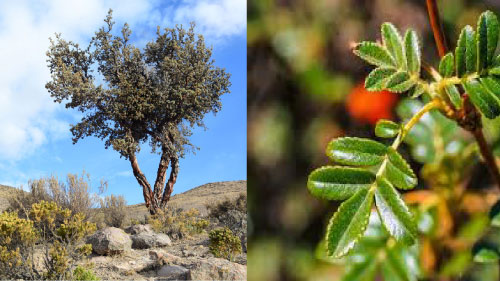
Queuña trees are among the most remarkable species found along the Inca Trail, known for their ability to survive in extreme high-altitude conditions, including freezing temperatures, strong winds, and low oxygen levels. Their twisted trunks and dense bark are natural adaptations that allow them to thrive where few other trees can grow.
They are essential to the Andean ecosystem, as they help regulate water cycles and create microhabitats for birds and other wildlife. Their roots play a vital role in preventing soil erosion and stabilizing mountain slopes, especially in fragile highland environments.
In local communities, young leaves are sometimes used in traditional cuisine, while Andean medicine values their natural properties to treat minor ailments such as digestive and respiratory issues. These uses highlight the importance of the queuña not only as an ecological species but also as part of cultural knowledge passed down through generations.
Ferns in the clouds forest
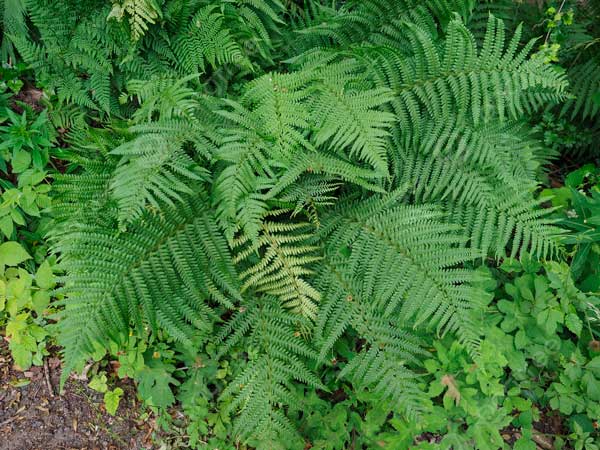
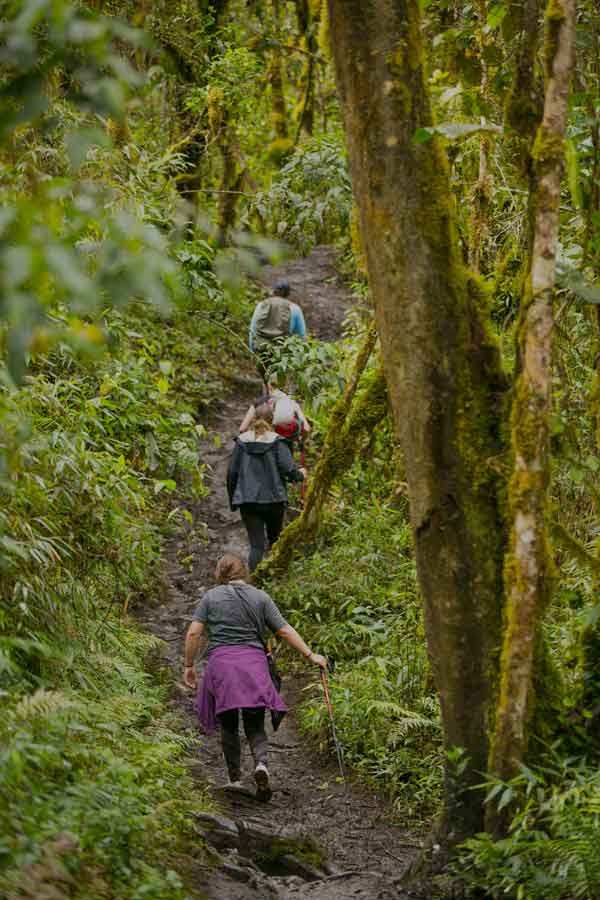
Ferns are very abundant along the Inca Trail, especially in areas where the environment becomes more humid as the route approaches cloud forest regions. Their lush green appearance adds to the visual richness of the landscape and contributes to the unique biodiversity of the trail.
They play an important ecological role by helping maintain moisture in the soil and regulating humidity in their surroundings. Their root systems stabilize the ground and prevent erosion, particularly in sloped or shaded areas where water retention is essential.
In addition to their environmental importance, ferns are often used ornamentally due to their delicate and attractive structure. You can commonly observe them toward the final sections of the Inca Trail, where the vegetation becomes denser and more tropical.
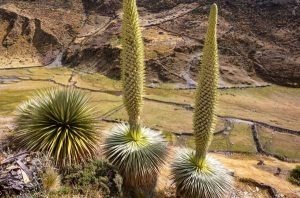
Puyas
Puyas are striking high-altitude plants that grow in the mountainous regions of South America and can also be seen along certain sections of the Inca Trail. These plants are well adapted to harsh environments, thriving in dry, rocky soils and intense sunlight.
Along the Inca Trail, you may encounter several species, including Puya raimondii, Puya chilensis, Puya besseae, and Puya mirabilis, each with its own distinctive appearance and ecological role. Some species are known for their impressive height and unique flowering structures, which can take many years to develop.
Beyond their botanical significance, puyas also hold cultural meaning in Andean traditions. They are sometimes associated with ceremonial symbolism, representing a connection between people, nature, and the surrounding mountains. This reflects the deep spiritual relationship that Andean cultures maintain with their natural environment.
Floripondios
These plants are famous for their large trumpet-shaped flowers and their psychoactive effects. They are very abundant in the region. Some indigenous communities have used these plants in rituals and ceremonies due to their hallucinogenic and medicinal properties.
However, it’s crucial to understand that improper handling of these plants can lead to severe effects and poisoning. Ideally, it is not advisable to touch them during the walk. We can see these plants in the lower part of the trail, particularly in the cloud forest. The recommendation in this case is that you observe the environment and respect nature, since the Inca Trail is a protected area.
Carnations
The Andean region is home to these plants, which are integral to the Inca Trail’s ecosystem. During the walk, you will primarily see two types of carnations: wild carnations and air carnations. These plants in the Inca Trail ecosystem help maintain the region’s biodiversity. They can be found in open and sunny areas, as well as near streams.
Threats to these species to the Inca Trail Flora
The Inca Trail is known as one of the most famous hiking routes in Peru and a key path to Machu Picchu, crossing a unique ecosystem within the Machu Picchu Sanctuary. Although this route is part of a protected natural heritage, the flora found in the Inca Trail faces increasing environmental pressures that also affect the fauna of Machu Picchu and overall Inca Trail wildlife.
Across the different zones of the Inca Trail, from cloud forest to high Andean landscapes, a rich flora and diverse wild flora coexist with many species found only in the Andes. These include delicate orchid species, small flowers, yellow flowers, native tree species, and important medicinal plants that have been used since the time of the Incas. However, these species within this fragile ecosystem are under threat.
Deforestation and illegal logging especially in lower areas of the trail continue to impact native vegetation. The loss of key tree species affects soil stability, increasing erosion along the classic Inca Trail. Climate change is also altering ecosystems, as shifts in rainfall and temperature disrupt the life cycles of plants and flowers, particularly orchids and ferns. These changes affect pollinators like the giant hummingbird and butterfly species, which are essential for plant reproduction.
Invasive species introduced into the region can outcompete native plants, reducing the biodiversity of Machu Picchu and threatening unique species that thrive in these environments. This imbalance impacts not only flora but also the fauna along the trail, including bird species such as Peru’s national bird, the Andean cock-of-the-rock, and animals like the spectacled bear, a rare bear species found in the Andes.
Tourism also plays a significant role. As the trail is one of the most famous trekking routes in South America, the growing number of visitors can damage vegetation. Many hikers may encounter while hiking the Inca delicate plants growing near Machu Picchu citadel, and without proper care, these can be trampled or removed. Some endangered species, including rare orchids and high-altitude plants, are especially vulnerable.
Efforts of conservation
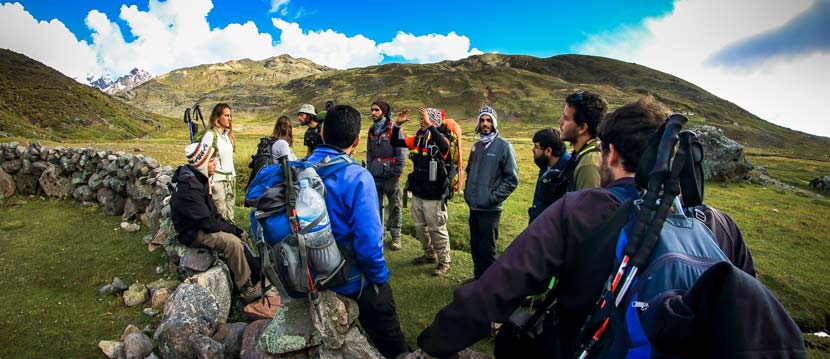
Environmental education is also essential. Visitors are encouraged to practice responsible tourism, avoid picking plants, and stay on designated paths during their journey along the trail. These actions help preserve the flora found in the Inca Trail near Machu Picchu and protect the balance of this unique ecosystem.
To protect the flora and fauna in Machu Picchu, important conservation measures have been implemented. The Peruvian government strictly regulates access, limiting the number of visitors and requiring all trekkers to travel with a licensed tour operator. This helps reduce impact across the different zones of the Inca Trail.
Local and international initiatives are working to restore habitats, replant native vegetation, and control invasive species. Many Andean communities actively participate in conservation through sustainable tourism and ecological programs, helping protect both the rich flora and the fauna in Machu Picchu.
The Inca Trail is home to countless emblematic species, and preserving this environment ensures that future generations can continue to enjoy the incredible biodiversity of Machu Picchu. Every visitor plays a role respecting nature during your journey along this historic trail helps protect one of the world’s most extraordinary ecological and cultural treasures.