




Deep in the heart of the Peruvian Amazon, Tambopata National Reserve is one of the most biodiverse protected areas on Earth. Covering more than 274,000 hectares (677,000 acres) of pristine rainforest, this incredible destination is home to hundreds of mammal species, colorful birds, reptiles, amphibians, and thousands of insects making it a paradise for wildlife lovers and photographers.
Whether you’re paddling across the peaceful waters of Lake Sandoval, navigating the Madre de Dios River, or hiking through dense jungle trails, every excursion offers the chance to discover fascinating creatures in their natural habitat. No two days in Tambopata are ever the same.
In this guide, you’ll discover the top 10 animals of Tambopata National Reserve, where you’re most likely to find them, and why this remarkable rainforest belongs on every nature lover’s bucket list.
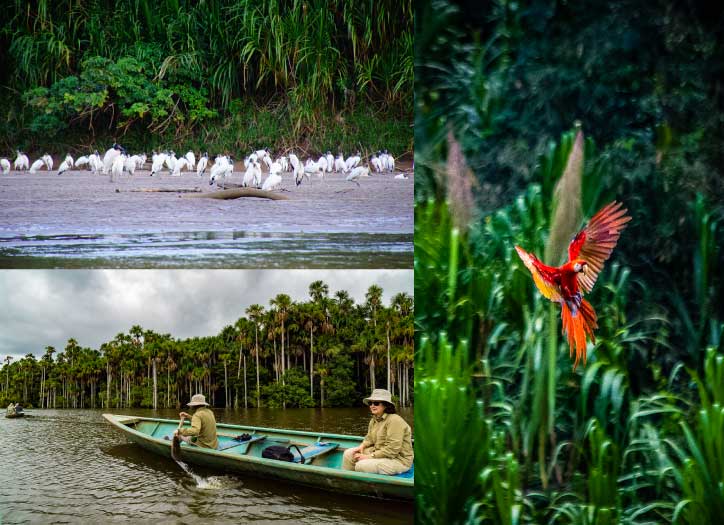
1. Giant River Otter (Pteronura brasiliensis) — Tambopata’s Playful Giant
The Giant River Otter is one of the most iconic and fascinating mammals found in the Tambopata National Reserve and the Peruvian Amazon. Known as the largest otter species in the world, this impressive aquatic predator can reach up to 1.8 meters (6 feet) in length and is recognized for its playful behavior, intelligence, and strong family bonds.
Unlike many solitary predators, Giant River Otters live in close-knit family groups, usually consisting of parents and their offspring. They work together to hunt fish, defend their territory, and protect their young. Their social behavior and constant communication through whistles, chirps, and other sounds make them one of the most entertaining animals to observe in the Amazon rainforest.
These remarkable mammals are excellent swimmers and spend much of their time in rivers, lakes, and lagoons. Their diet mainly consists of fish and other aquatic animals, making them an important part of the Amazon food chain and a key indicator of healthy freshwater ecosystems.
During a Tambopata wildlife tour, travelers have the opportunity to observe these playful giants swimming, fishing, resting on riverbanks, or interacting with their family groups. Their energetic movements and loud vocalizations create one of the most memorable wildlife experiences in the Amazon.
The best place to see Giant River Otters in Tambopata is Lake Sandoval, a beautiful oxbow lake surrounded by dense rainforest and home to incredible biodiversity. The calm waters of the lake provide an ideal environment for observing these animals in their natural habitat.
Best place to see: Lake Sandoval
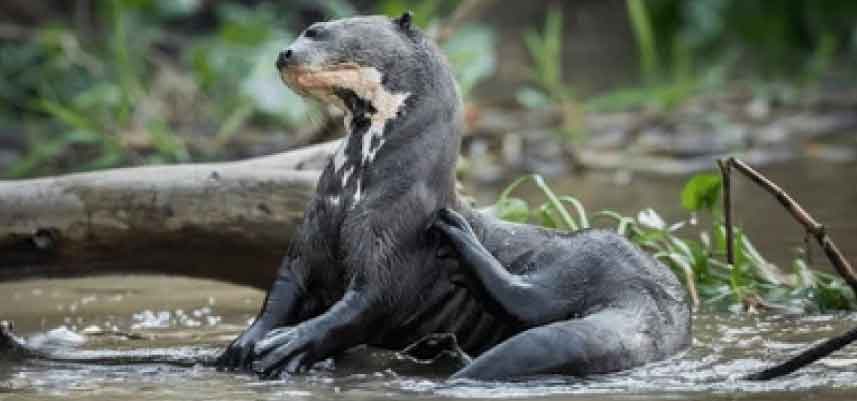
2. Jaguar (Panthera onca) — The Amazon’s Elusive Predator
The Jaguar is the largest wild cat in the Americas and one of the most powerful predators found in the Tambopata National Reserve. Known for its strength, beauty, and mysterious behavior, this magnificent feline represents one of the most fascinating symbols of the Peruvian Amazon wildlife.
With its distinctive golden coat covered with black rosette patterns, the jaguar is perfectly adapted to life in the rainforest. It is an excellent swimmer and a highly skilled hunter, capable of moving silently through dense vegetation, flooded forests, and along riverbanks in search of prey.
Although jaguar sightings are rare due to their solitary and secretive nature, Tambopata National Reserve is considered one of the best places in Peru to protect and study these incredible animals in their natural habitat. The extensive rainforest, rivers, and protected areas provide an ideal environment for their survival.
Jaguars are mainly active during the early morning and late afternoon when they move through their territory looking for food. Their diet includes animals such as capybaras, caimans, turtles, and other Amazon wildlife species, helping maintain the natural balance of the rainforest ecosystem.
During a Tambopata wildlife tour, travelers may discover signs of jaguar activity, such as footprints, tracks, and other evidence of their presence. While seeing a jaguar in the wild requires patience and luck, the possibility of encountering this legendary predator makes every Amazon expedition an unforgettable adventure.Best place to see: Remote riverbanks and primary rainforest
Best place to see: Remote rainforest and river areas of Tambopata National Reserve
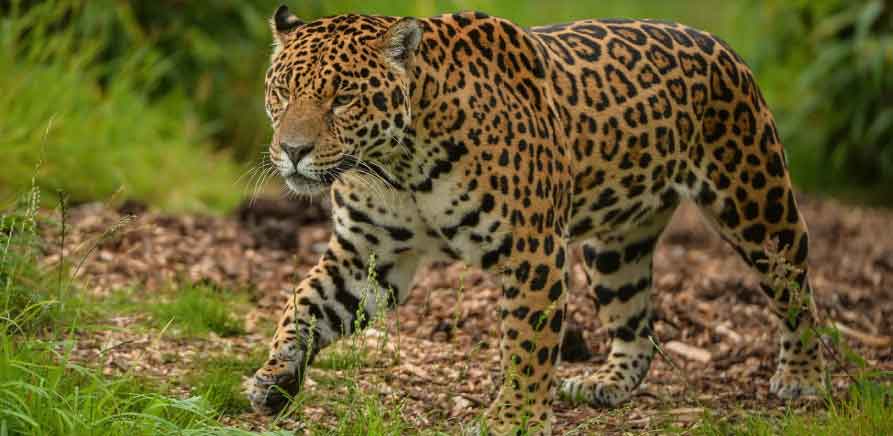
3. Scarlet Macaw (Ara macao) — Tambopata’s Clay Lick Icon
The Scarlet Macaw is one of the most iconic and breathtaking birds found in the Tambopata National Reserve and the Peruvian Amazon. Famous for its brilliant red, yellow, and blue feathers, this magnificent parrot represents the incredible biodiversity and vibrant colors of the rainforest.
One of the most unforgettable experiences in Tambopata is witnessing dozens of Scarlet Macaws gathering at the clay licks during the early morning hours. As the first sunlight reaches the rainforest, these colorful birds fly together toward the clay walls, creating a spectacular natural display that attracts wildlife photographers and nature lovers from around the world.
Scarlet Macaws visit clay licks to consume mineral-rich clay, which helps neutralize natural toxins found in some fruits and seeds they eat. This unique behavior makes the clay licks one of the most fascinating wildlife experiences in the Amazon.
These intelligent and social birds usually travel in pairs or small family groups, forming strong bonds with their mates. They feed mainly on fruits, seeds, nuts, and plant material found throughout the rainforest, helping with seed dispersal and contributing to the health of the Amazon ecosystem.
During a Tambopata wildlife tour, visitors have the opportunity to observe these spectacular birds flying above the jungle canopy, resting in tall trees, or gathering at one of the most famous wildlife locations in Peru: the Chuncho Macaw Clay Lick.
Best place to see: Chuncho Macaw Clay Lick, Tambopata National Reserve
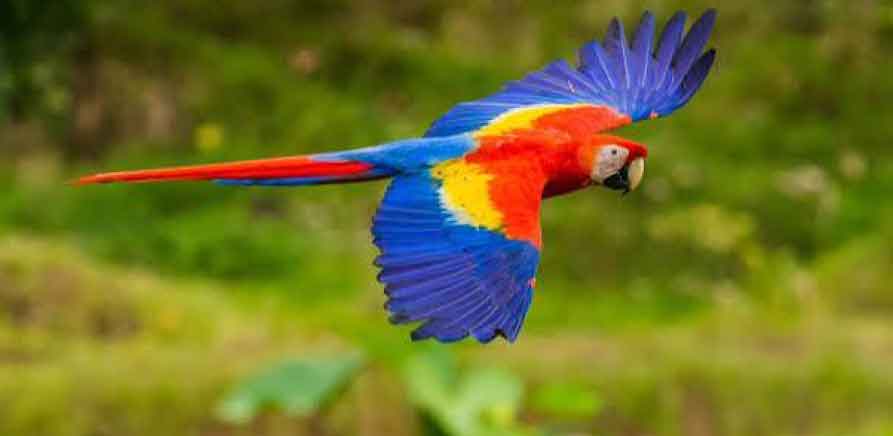
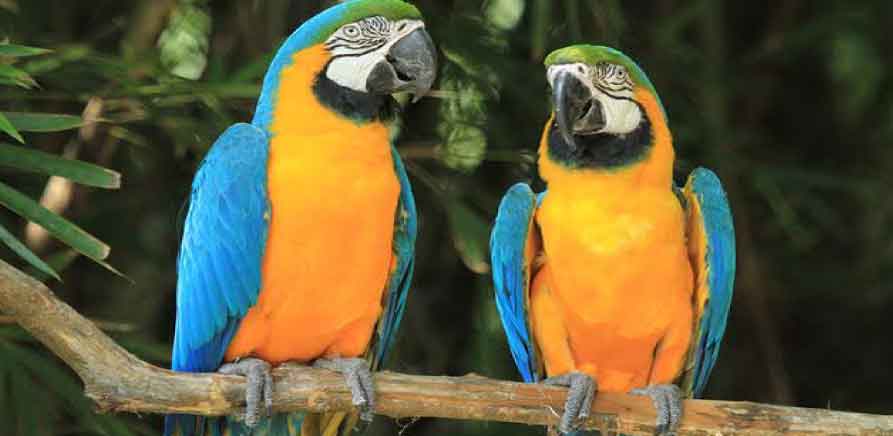
4. Blue-and-Yellow Macaw (Ara ararauna) — A Lifelong Pair in the Canopy
The Blue-and-Yellow Macaw is one of the most iconic and beautiful birds found in the Tambopata National Reserveand the Peruvian Amazon. With its brilliant blue wings, golden-yellow chest, and distinctive curved beak, this spectacular parrot adds vibrant colors and unforgettable sounds to the rainforest landscape.
These intelligent and social birds are usually seen flying high above the forest canopy in pairs or small groups. Blue-and-Yellow Macaws are known for forming strong lifelong bonds with their partners, often traveling, feeding, and resting together throughout the year.
Their powerful beaks allow them to break hard seeds and nuts, which make up an important part of their diet. They also feed on fruits and natural resources found in the rainforest, helping contribute to the ecological balance of the Amazon ecosystem through seed dispersal.
During a Tambopata wildlife tour, visitors may have the opportunity to observe these magnificent birds flying along the Madre de Dios River, resting in tall rainforest trees, or gathering near clay licks. Watching their colorful feathers illuminated by the morning sunlight is one of the most memorable experiences for nature lovers and photographers visiting the Amazon.
Best place to see: Forest canopy and clay licks of Tambopata National Reserve
5. Podocnemis unifilis (Taricaya Turtle) — The Amazon’s Peaceful River Turtle
The Podocnemis unifilis, commonly known as the Taricaya Turtle or Yellow-Spotted River Turtle, is one of the most fascinating freshwater reptiles found in the Tambopata National Reserve. This peaceful Amazonian turtle inhabits rivers, lagoons, and flooded forests, playing an important role in the balance of the rainforest ecosystem.
The Taricaya Turtle can be easily identified by the distinctive yellow spots on the sides of its head and neck, especially in younger individuals. These colorful markings make it one of the most recognizable turtle species in the Peruvian Amazon.
Unlike many other reptiles, Podocnemis unifilis spends most of its life in aquatic environments, where it feeds on fruits, seeds, aquatic plants, and small aquatic organisms. By consuming and dispersing seeds, this species contributes to the natural regeneration of the Amazon rainforest.
During a Tambopata wildlife tour, travelers may have the opportunity to observe these turtles resting on tree trunks, riverbanks, or swimming quietly through calm waters. They are often found in areas such as Lake Sandoval and the Madre de Dios River, where the surrounding wetlands provide the perfect habitat for their survival.
Best place to see: Lake Sandoval & Madre de Dios River
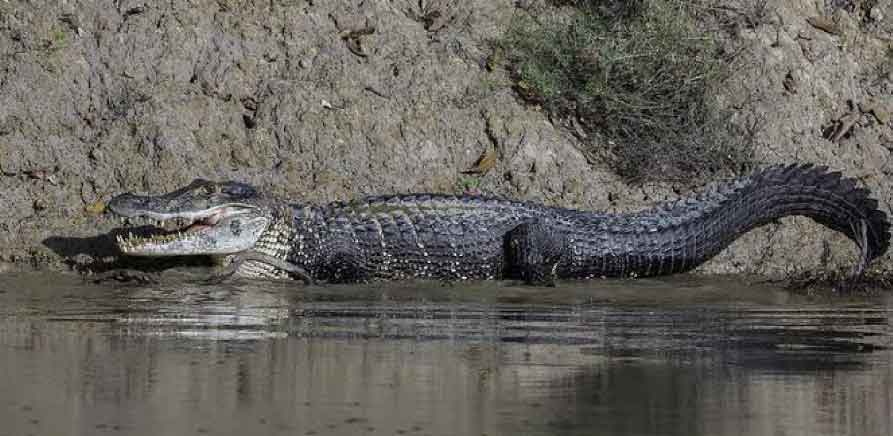
6. Black Caiman (Melanosuchus niger) — Apex Predator of the Rivers
The Black Caiman is one of the most impressive reptiles found in the Tambopata National Reserve and throughout the Peruvian Amazon. As one of the largest predators in the Amazon rainforest, this powerful reptile can grow more than 5 meters (16 feet) in length, making it one of the most fascinating animals to encounter during an Amazon adventure.
Recognized by its dark coloration, strong jaws, and armored body, the Black Caiman is perfectly adapted to life in rivers, lakes, and flooded forests. As an apex predator, it plays an essential role in maintaining the balance of aquatic ecosystems by controlling populations of fish, birds, turtles, and other Amazon wildlife.
Unlike many animals in the rainforest, Black Caimans are often easier to observe at night. During a Tambopata night safari, visitors can navigate through calm waters while searching for the bright reflections of their eyes along riverbanks and lagoons. This unique experience offers travelers a glimpse into the mysterious nocturnal world of the Amazon.
The Black Caiman is a patient and skilled hunter, usually remaining still while waiting for the right moment to capture its prey. Despite its impressive size and powerful appearance, it is an important species for maintaining healthy freshwater environments throughout the Amazon basin.
Best place to see: Lake Sandoval and Amazon waterways in Tambopata National Reserve
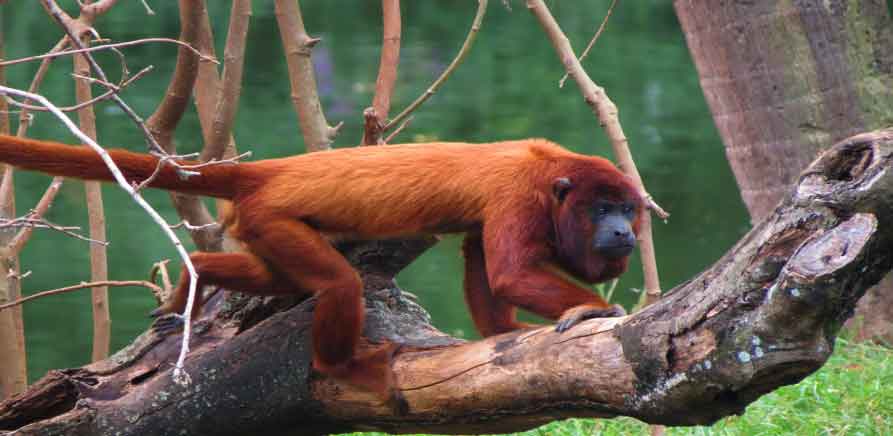
7. Red Howler Monkey (Alouatta seniculus) — The Amazon’s Loudest Voice
The Red Howler Monkey is one of the most recognizable primates found in the Tambopata National Reserve and one of the most fascinating animals of the Peruvian Amazon rainforest. Famous for its deep and powerful calls, this monkey creates one of the most impressive natural sounds of the jungle, often announcing the beginning of a new day before sunrise.
With its reddish-brown fur, strong body, and long tail adapted for life in the trees, the Red Howler Monkey spends most of its time high in the rainforest canopy. It moves slowly between branches while feeding mainly on leaves, fruits, flowers, and other plant materials available in the forest.
One of the most remarkable characteristics of this species is its loud vocalization. Thanks to a specialized throat structure, Red Howler Monkeys can produce calls that travel several kilometers through the dense Amazon forest. These sounds are used to communicate with their group members and to mark their territory.
During a Tambopata wildlife tour, travelers may hear these powerful calls echoing through the trees or spot groups resting and feeding among the canopy. Although they are not always easy to see due to their high location in the forest, their unmistakable voices make them one of the most memorable encounters in the Amazon.
Best place to see: Rainforest canopy and jungle trails in Tambopata National Reserve
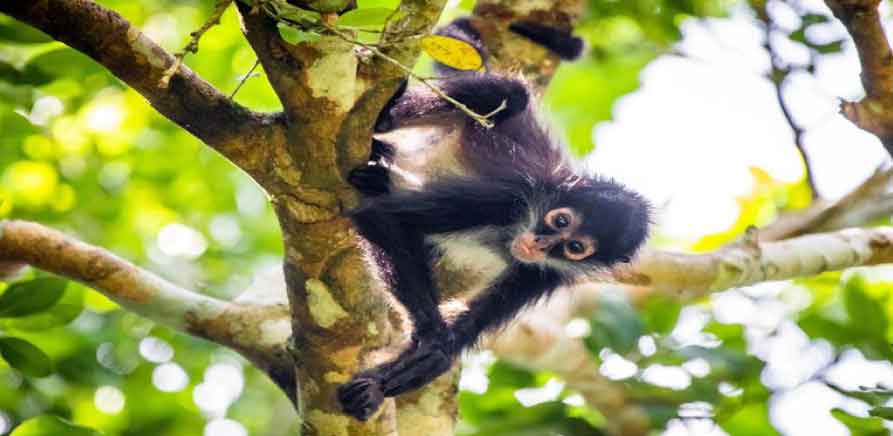
8. Black Spider Monkey (Ateles chamek) — Tambopata’s Acrobat
The Black Spider Monkey is one of the most agile and fascinating primates found in the Tambopata National Reserve and the Peruvian Amazon rainforest. Known for its long limbs, flexible tail, and incredible ability to move through the treetops, this species is a true acrobat of the jungle canopy.
With its dark-colored fur, slender body, and powerful prehensile tail, the Black Spider Monkey (Ateles chamek) is perfectly adapted to life high above the forest floor. Its tail works almost like an extra arm, allowing it to balance, swing between branches, and move quickly through the dense rainforest while searching for food.
These intelligent monkeys are highly social animals that usually live in groups. They spend most of their day traveling through the canopy in search of fruits, seeds, flowers, and young leaves. Their energetic movements and playful behavior make them one of the most exciting wildlife encounters during a Tambopata jungle tour.
Although they are usually found high in the trees, patient visitors may observe them crossing between branches or feeding in fruit-producing trees along jungle trails. Seeing a group of Black Spider Monkeys moving freely through the rainforest is a memorable experience that highlights the incredible biodiversity of Tambopata National Reserve.
Best place to see: Rainforest canopy and primary forests of Tambopata National Reserve
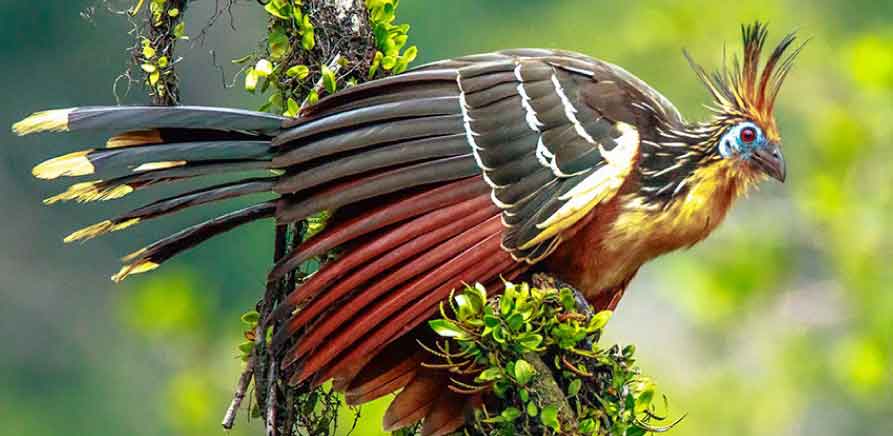
9. Hoatzin (Opisthocomus hoazin) — The Amazon’s Prehistoric Bird
The Hoatzin is one of the most unique and unusual birds found in the Tambopata National Reserve and the Peruvian Amazon rainforest. Often called the “stink bird”, this fascinating species has a distinctive digestive system that works similarly to that of some herbivorous mammals, allowing it to process leaves through fermentation.
With its prehistoric appearance, bright blue facial skin, red eyes, long crest, and unusual behavior, the Hoatzin (Opisthocomus hoazin) is one of the easiest Amazon birds to recognize. Its strange appearance has fascinated scientists and travelers for years, making it one of the most interesting wildlife encounters during a Tambopata jungle tour.
Unlike many other birds, Hoatzins are mainly herbivores, feeding on leaves, flowers, and fruits found near rivers, lagoons, and flooded forests. They are excellent climbers and spend most of their time resting and moving slowly through vegetation close to the water.
Young Hoatzins have a unique adaptation: small claws on their wings that help them climb branches and escape into the vegetation when they feel threatened. This characteristic has given them a reputation as one of the most ancient-looking birds of the Amazon.
During a wildlife tour in Tambopata, visitors can often spot Hoatzins perched quietly on branches near wetlands and lakes. Their unusual appearance and slow movements make them a memorable species to discover while exploring the incredible biodiversity of the Amazon rainforest in Peru.
Best place to see: Lake Sandoval and wetlands of Tambopata National Reserve
10.Corallus caninus (Emerald Tree Boa) — The Amazon’s Green Canopy Hunter
The Corallus caninus, commonly known as the Emerald Tree Boa, is one of the most beautiful and fascinating snakes found in the Tambopata National Reserve and the Peruvian Amazon rainforest. Famous for its bright emerald-green coloration and unique appearance, this arboreal snake is perfectly adapted to life high in the rainforest canopy.
Unlike many snakes that move mainly on the ground, the Emerald Tree Boa spends most of its life resting among tree branches, where its green color provides excellent camouflage among leaves and vegetation. Its strong body and prehensile tail allow it to move confidently through the trees while waiting patiently for prey.
The Emerald Tree Boa is a nocturnal predator that uses its heat-sensitive facial pits to detect small animals in the darkness. Its diet mainly consists of birds, small mammals, and other rainforest creatures. Instead of actively chasing prey, it remains still and uses its camouflage and patience to hunt efficiently.
During a Tambopata wildlife tour, spotting a Corallus caninus is a rare and exciting experience. Because of its excellent camouflage and quiet behavior, these snakes can be difficult to find, but experienced guides can sometimes locate them resting on branches during jungle walks or night excursions.
This incredible reptile represents the extraordinary biodiversity of the Tambopata National Reserve, where countless species have adapted to survive in one of the richest ecosystems on Earth.
Best place to see: Rainforest canopy and jungle trails of Tambopata National Reserve
Why Tambopata National Reserve Is One of the Best Places for Wildlife Watching
Tambopata National Reserve protects one of the richest ecosystems in the world. Scientists have recorded more than 600 bird species, over 200 mammal species, hundreds of reptiles and amphibians, and thousands of insects and plants within this extraordinary rainforest.
The combination of protected forests, oxbow lakes, rivers, and clay licks creates the perfect habitat for an incredible diversity of Peruvian Amazon wildlife. Whether you’re interested in birdwatching, wildlife photography, or simply experiencing the Amazon’s natural beauty, Tambopata offers unforgettable encounters at every turn.
Final Thoughts
If you’re planning a trip to the Peruvian Amazon, Tambopata National Reserve is one of the best destinations to experience wildlife in its natural habitat. From playful Giant River Otters and colorful Scarlet Macaws to elusive Jaguars and fascinating Black Caimans, every excursion offers a new opportunity to discover the incredible biodiversity of this protected rainforest.
Whether you choose a 3-day Tambopata tour or a longer Amazon adventure, don’t forget your binoculars and camera. The rainforest is full of unforgettable moments waiting to be discovered.